
July 12th-14th 2024
Seminar Quick Links
- Registration – SOLD OUT!
- Workshops & Instructors
- Schedule
- Location
- Sketch Correspondent
- Art Show – July 12-21, 2024
- Sponsors

Workshops & Instructors


Description
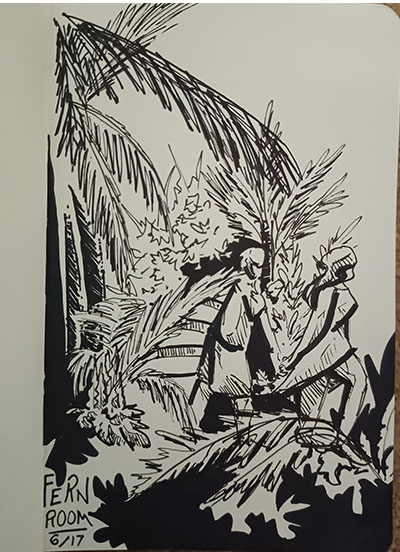
Create vibrant, dynamic sketches quickly and confidently – and without getting hung up on the details – with Speed Sketching by Bridget Deatrick. You’ll learn a variety of drawing shorthand techniques to help you sketch scenes that are perfect in their imperfection by building a basic shapes library and highlighting key elements that capture the experience of a space. Along the way, artist Bridget Deatrick will show you how to squeeze more creativity into our busy schedules. These quick drawings make great warm-ups, thumbnail studies or can be used as a base for a larger piece as you continue to add detail on top of the rough sketch. Speed sketching techniques are perfect when you’re in a time crunch or with an impatient non-sketcher!
Distance to sketching location: 0.9 mile
Average walking time: 12 minutes
Learning Goals
In this workshop, participants will:
- Develop a set of sketching shorthand textures and shapes for common scene elements
- Dissect a scene to identify the important elements to capture
- Learn to effectively use negative space
- Experiment with color and form
- Put pen to paper with confidence
Supply List
- Bold dark color marker, such as a regular or broad tip Sharpie or artist’s chisel tip marker (suggested colors: black or dark blue). Consider the size of your sketchbook when selecting your largest marker
- Thick pen matching your bold marker color such as a sign pen or micron, size 5 or greater
- Assorted smaller tip pens
- 1 or more color matching thick pens and dark color marker
- Remaining: your choice/whatever is on hand. Colored inks and basic ballpoint pens work fine
- 2-3 vibrant marker colors such as artist’s chisel tip markers or highlighters (yes, like office supplies). Suggested colors: contrasting
Optional Supplies
- Optional: white paint pen or gel pen and/or white pencil
- Spare paper to use as a backing sheet (to prevent bleed through)
About Bridget
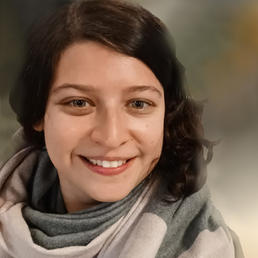
Bridget Deatrick, a licensed landscape architect, found her passion for sketching through a semester-long college class called Drawing is Knowing, which included on-location drawing. The lessons about strict perspective and accuracy might not have stuck but the love of getting to know new locations and subjects through artistic exploration did.
Bridget became serious about sketching as she left college and joined USk Chicago in 2015, shortly after moving to the suburbs for work. In addition to participating in the chapter meet-ups, she enjoys completing social media challenges and these daily assignments helped her realize the two important things that have guided her personal practice: A drawing doesn’t have to be a serious work of art to be good and nothing can replace experience. As she completed more of these challenges, she found herself doing a little bit every day by necessity, not stressing over perfection and having fun drawing things for herself. She now has a regular personal habit of drawing something (almost) every day for Urban Sketchers events and personal projects. She also works on commission, creating original artwork for new games in development with her husband and friends.
Find Bridget online at:
deatrick-design
Description
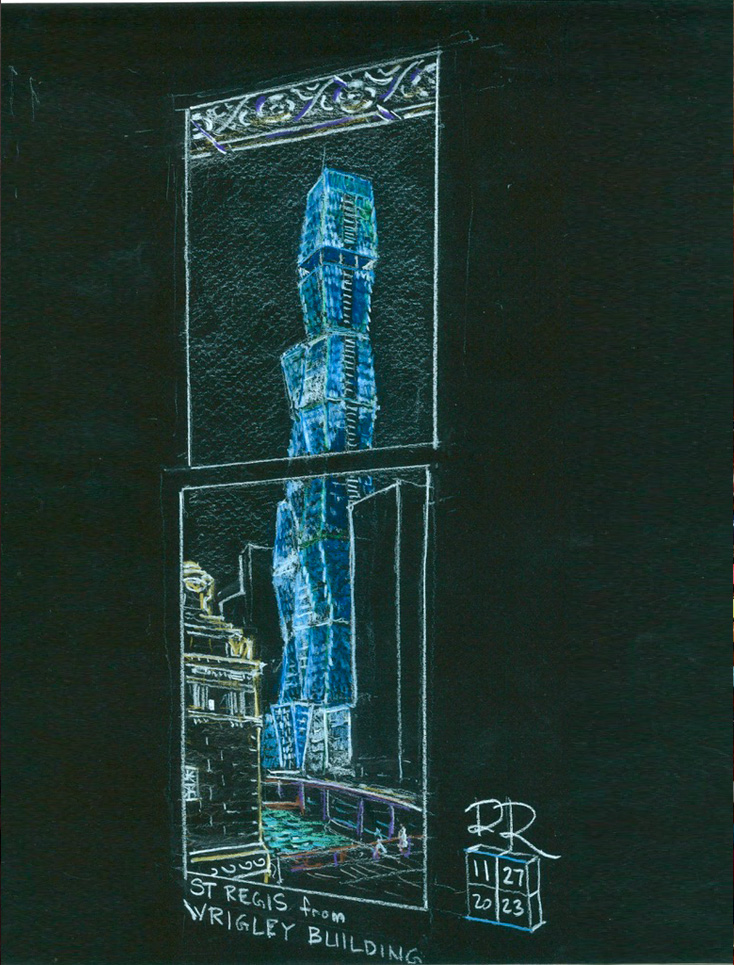
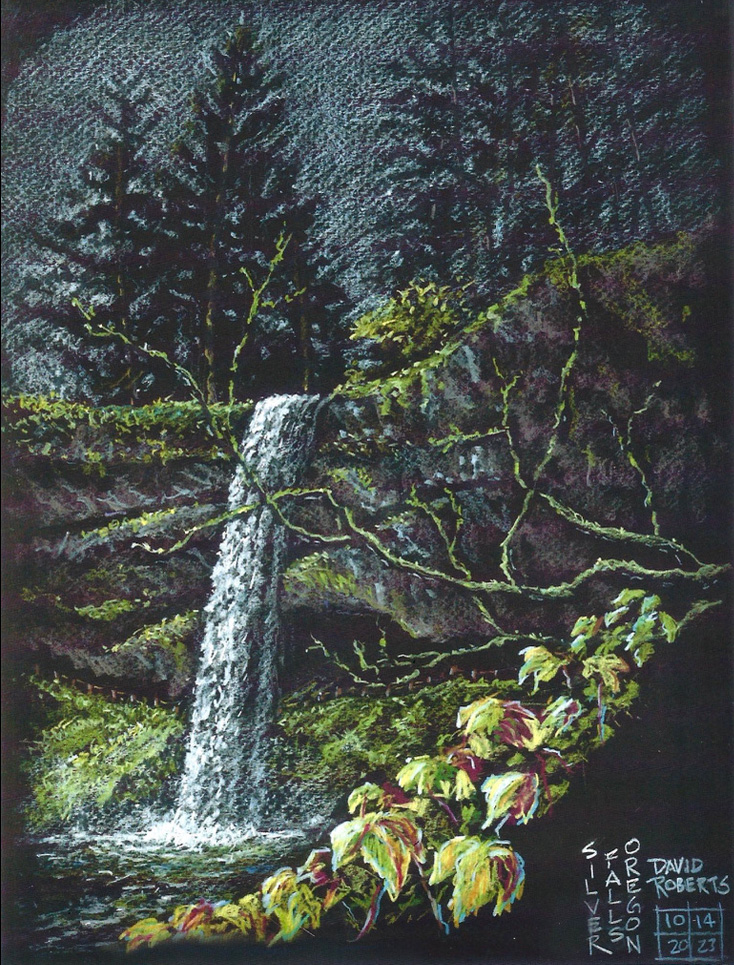
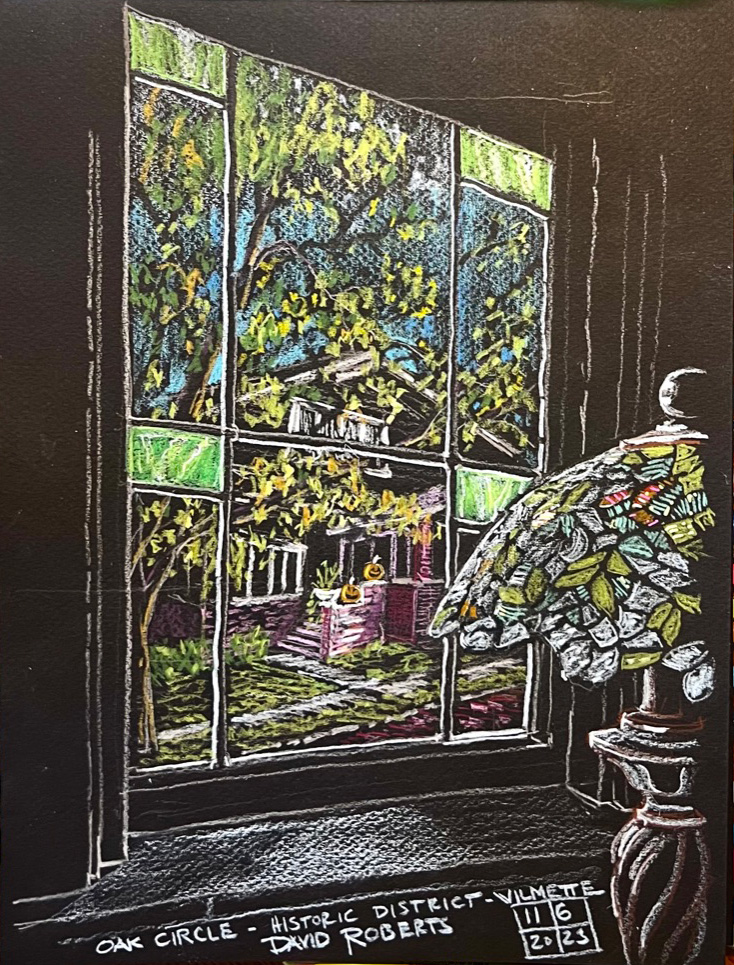
Stretch your visual art muscles by learning how to sketch on black paper in Sketching on the Dark Side, a workshop that presents challenges to traditional visual interpretation. David Roberts returns this year to show you how to create a vibrant colorful sketch with drawing exercises on black paper. We will learn how to look at our subjects in reverse and build the sketch beginning with light edges, surfaces and reflections. Traditionally we use dark pencil/marker/paint to fill in shade and shadow on white surfaces to describe our subjects; when working on black paper, we use white and light colors on a black surface to describe light on or from our subjects.
Distance to sketching location: 0.1 mile
Average walking time: 1 minute
Learning Goals
In this workshop, participants will:
- Exercise and stretch our visual muscles by looking at subjects and sites in different ways.
- Observe and explore sketching of light, color, shade, and shadow in the reverse.
- Use negative space to describe form and objects.
- Tell a story with a vibrant colorful sketch.
Supply List
- Black drawing paper: listed types will work well, and there are other quality black papers available.
- Be aware! The cheapest black paper available does NOT yield quality results, and will fade quickly
- Blick Art typically stocks several brands and sizes.
- Canson Mi-Tientes – pad or single sheets. Paper has a nice texture for soft pencil layering and shading
- Fabriano – pad; various sizes. High quality paper has a smooth surface for a harder pencil application
- Stillman & Birn – bound sketch book. High quality paper has a surface in between the other options. It comes bound in a sketchbook format.
- White pencils
- White pencil – my favorite is Caran d’ache SupraColor II soft. I like a pencil that bites well and can also softly shade using the side. Bring several types of white pencils if you can, and you will discover your own sketch eye and style.
- Color pencils – Caran d’ache SupraColor II soft. Note: Any quality color pencils will work well
- White pens
- White GellyRoll Pen Sakura – 8 or 10 for occasional highlights/accents
- Faber Castell – Pitt Artist Pen – White 101 – bullet nib and/or brush tip
- Black pen/market
- Micron or equivalent small/medium/large tips. For occasional editing of white marks.
- Eraser
- Pencil sharpener and razor blade
NOTE: I suggest testing pencils and pens in store on black paper before buying when possible.
Optional Supplies
- Color Pens
- Color GellyRoll Pen Sakura – 8 or 10 yellow, green, red, blue. for occasional highlights/accents
About David
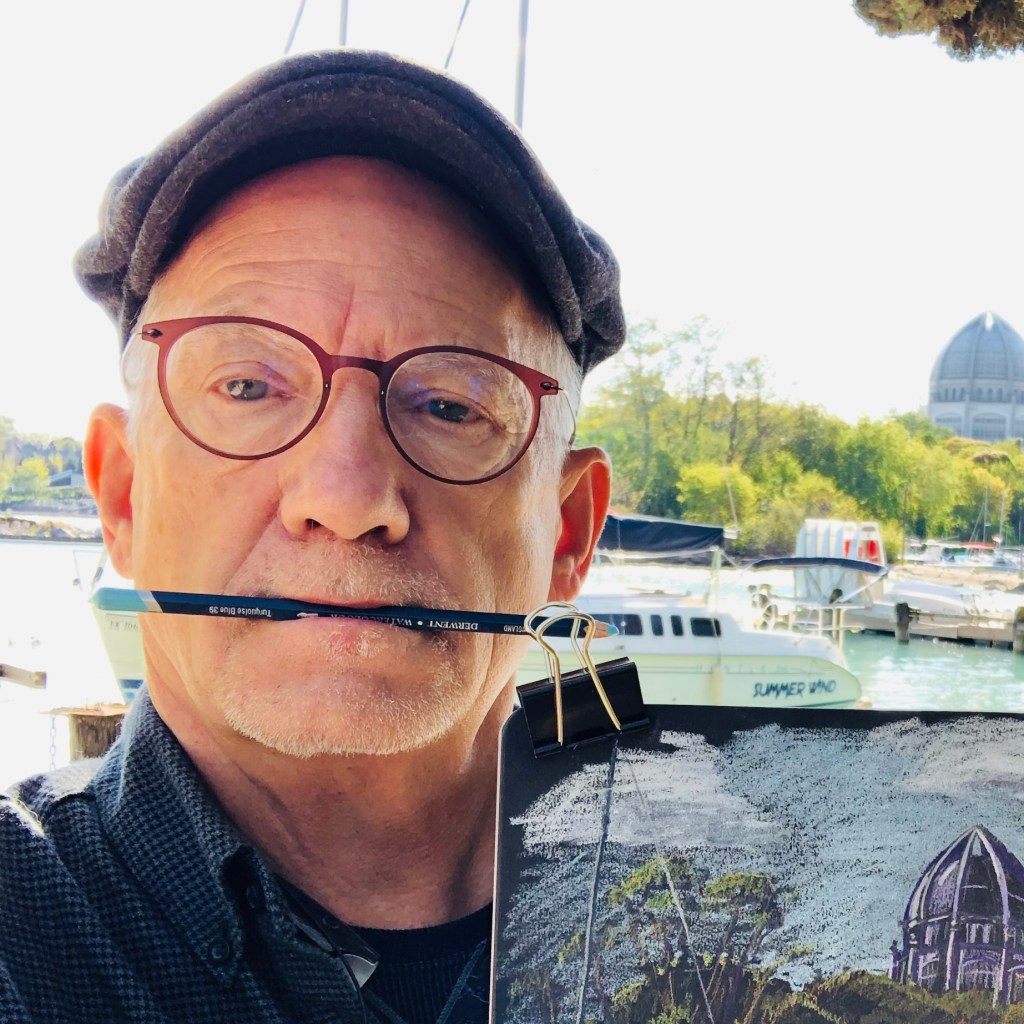
David Roberts returns to the Chicago Sketch Seminar with an expanded version of “Sketching on the Dark Side(s)” an expansion of David’s previous workshop that now teaches us how to create vibrant and dynamic sketches on Black AND Dark color paper.
Always an urban sketcher, even before that term or the organization existed, David Roberts became hooked on urban sketching and its guiding ethos when he attended the 2017 Urban Sketchers International Symposium in Chicago.
Retired now, David was President of Roberts Architects, Evanston, Illinois and taught architectural design, construction detailing, and drafting as an adjunct architecture professor at the University of Illinois Chicago. He graduated from the University of Illinois, Chicago with a Bachelor of Architecture.
He was formally taught architectural sketching by noted architect and consummate sketcher, Larry B. Perkins while attending architecture school in Versailles, France. While on their sketch trip through southwestern France, David and his small group of fellow architecture students were required to complete a minimum of four sketches per day with rigorous daily critiques by Mr. Perkins.
In addition to sketching with pencil, pen and paint, David is also a painter and an active member of the Evanston Art Center and Evanston Made.
Find David online at:
Facebook: David Roberts
Instagram: davidroberts.sketchbook
Description
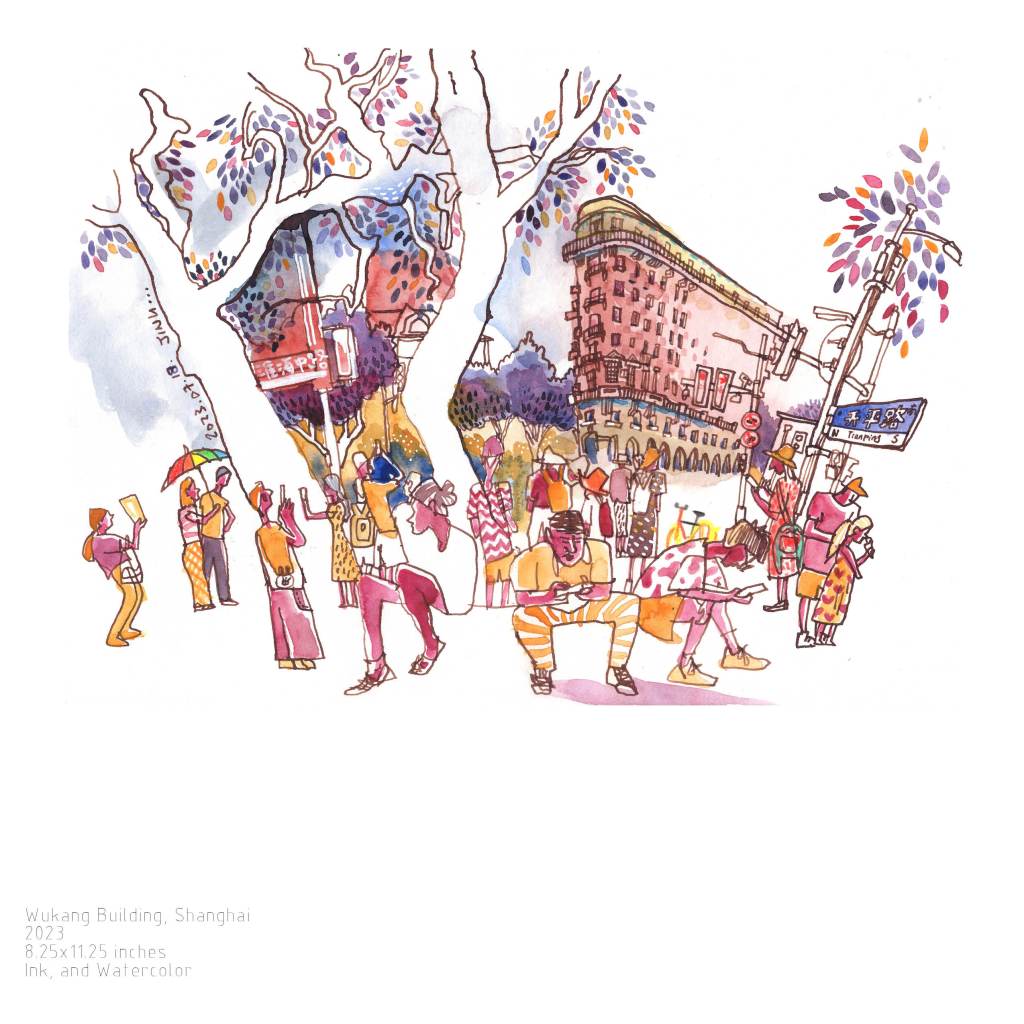
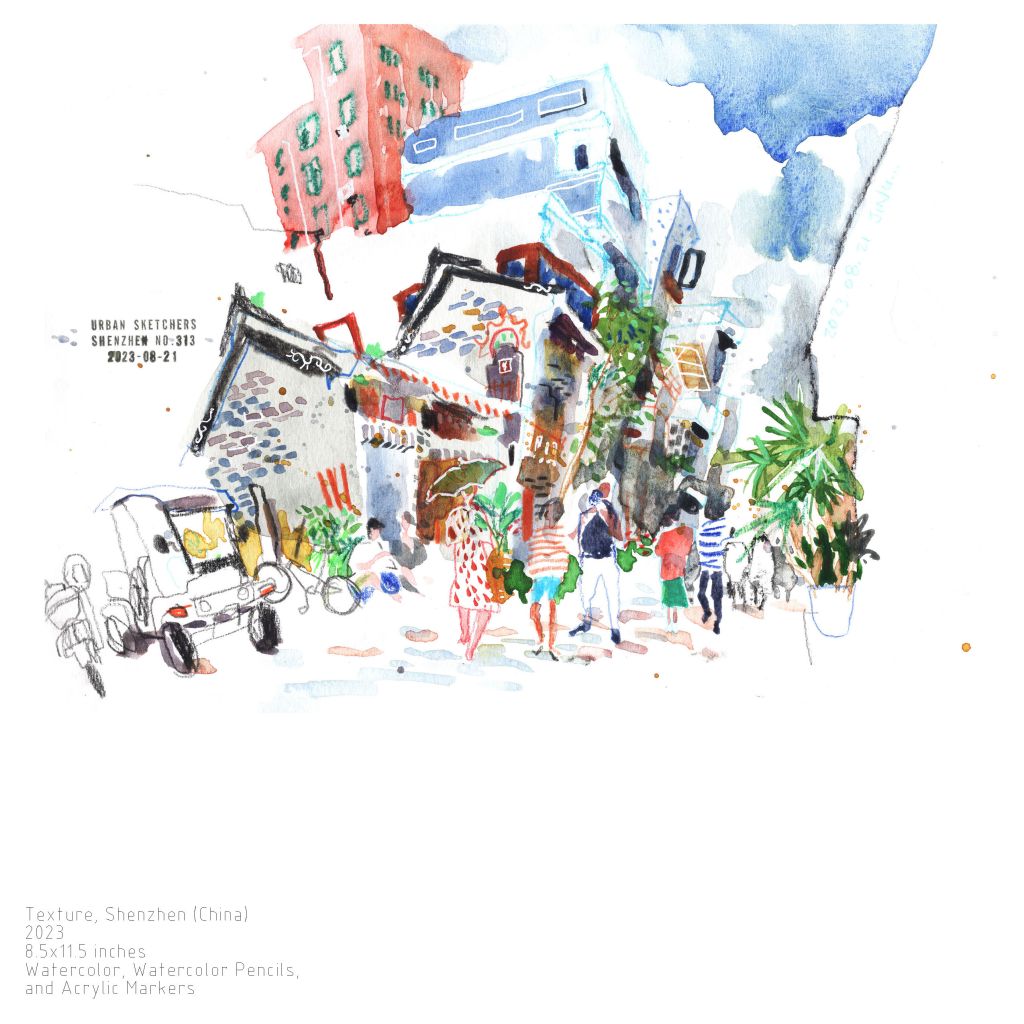
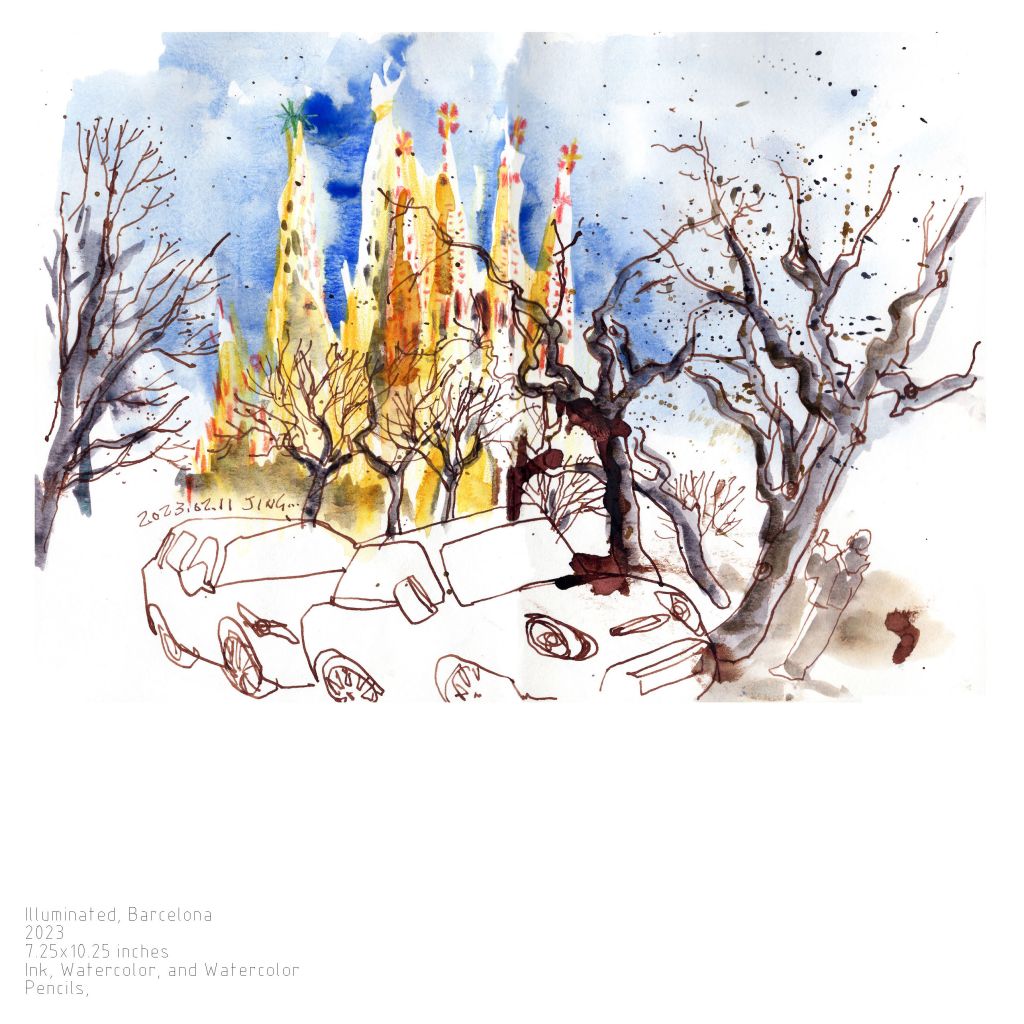
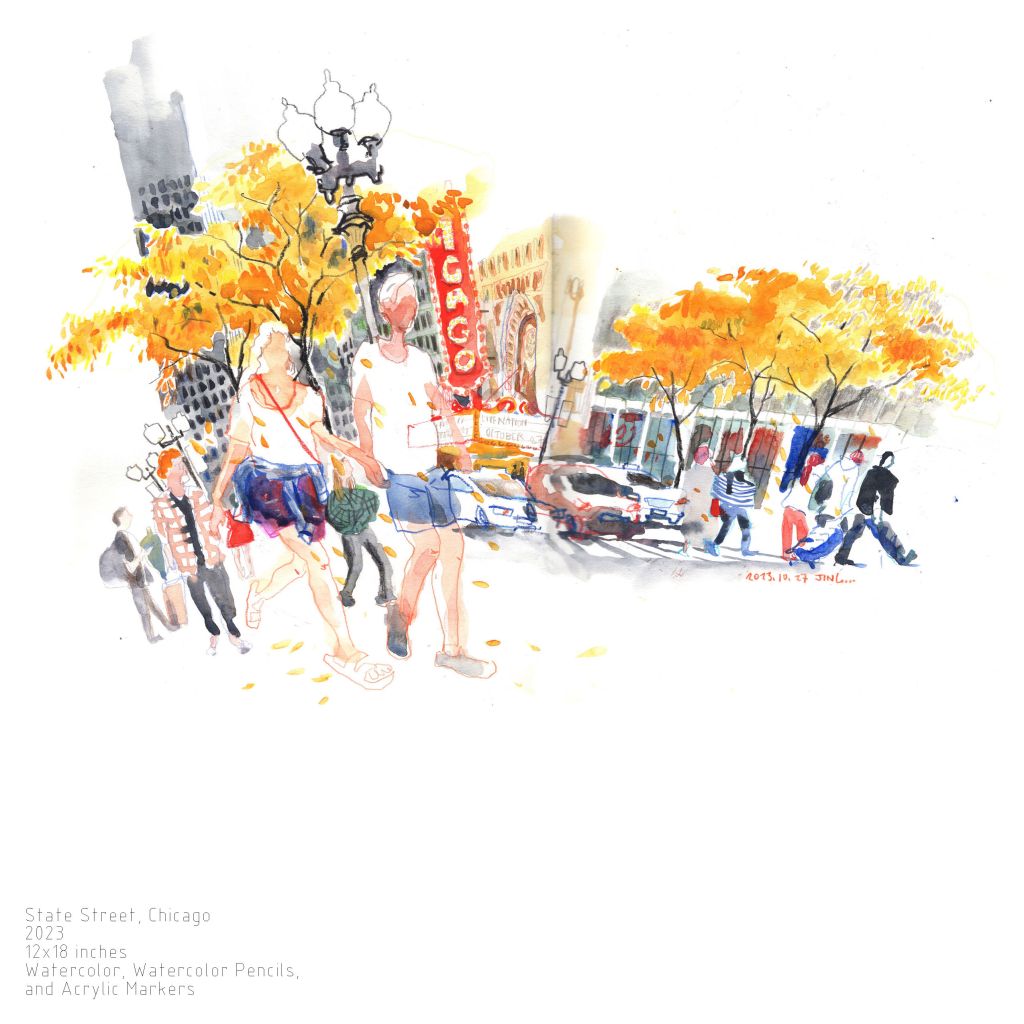
Trees play a vital role in creating a harmonious balance between urban development and the environment. However, trees can be a challenge to urban sketchers. In “Sketch Trees in an Urban Context, Jing Zhang explores techniques for drawing trees in an urban context, specifically in the vibrant city of Chicago. By understanding the interplay of foreground and background, participants will learn how to incorporate trees into their urban sketches to add depth, character, and a touch of nature to their artwork.
Distance to sketching location: 0.1 mile
Average walking time: 1 minute
Learning Goals
In this workshop, participants will:
- Learn skills needed to confidently draw trees
- Understand the foreground/background concept to compose a drawing
- Explore various media/techniques
Supply List
- Dip pen and brown waterproof ink
- Paper/Sketchbook – Watercolor papers are recommended
- Watercolor set
Optional Supplies
- Dip pen and brown waterproof ink
- Paper/Sketchbook – Watercolor papers are recommended
- Watercolor set
- Watercolor pencils
- Acrylic makers
About Jenny Jing Zhang
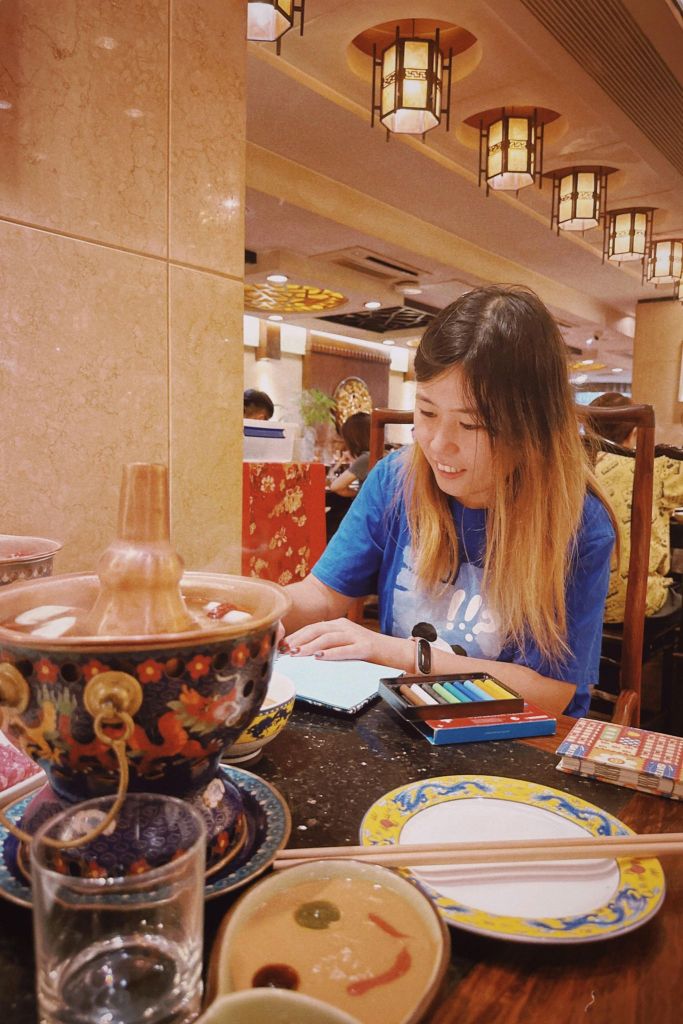
An architectural designer, artist, illustrator, and educator, Jenny Jing Zhang has been sketching and drawing since she was a child. Growing up, she had the opportunity to sketch on location in many different cities in her native China.
She continued to develop a passion for both art and the built world and in 2013 graduated with a Master’s degree in Architecture from Texas A&M University.To this day, her architectural training shapes her sketch explorations, mirrored by her use of sketching as an essential design tool as an architectural designer working in Chicago. Her specialty is freehand ink drawings with light watercolor expression. Inspired by the quote from Paul Klee: “A drawing is simply a line going for a walk,” she enjoys using loose lines and letting the line guide her on the paper.
Jenny joined Urban Sketchers Chicago in 2016 and volunteered for the 2017 World Symposium hosted by USK Chicago. She taught workshops at USK Chicago seminars in 2019 and 2022 and shared her sketching experience with urban sketcher groups, including USkTalks and several local chapters. In 2022, Jenny was awarded a fellowship to reside and conduct urban sketching in Civita di Bagnoregio, Italy.
Find Jing online at:
Instagram: @jennymouse2003

Description
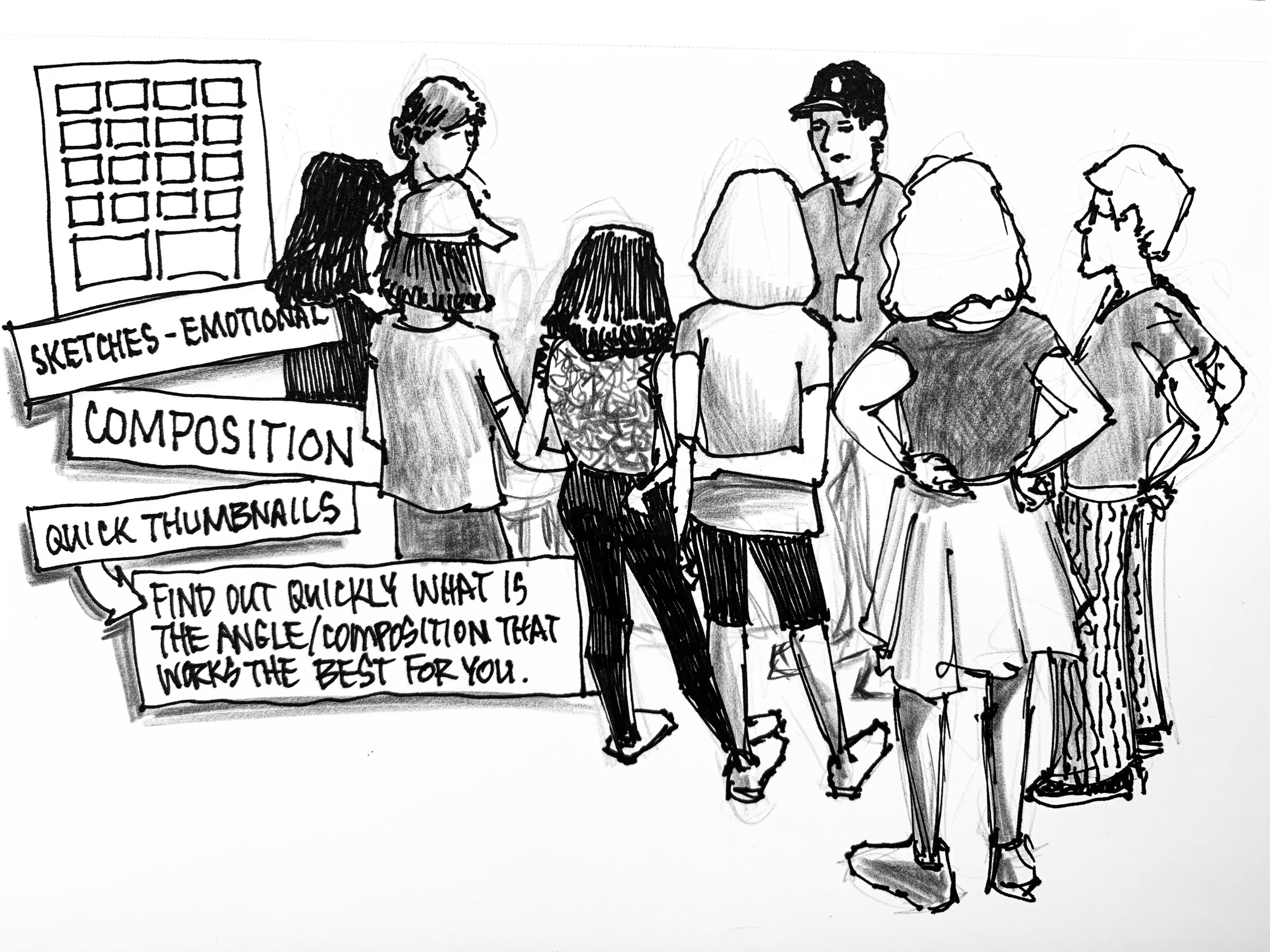
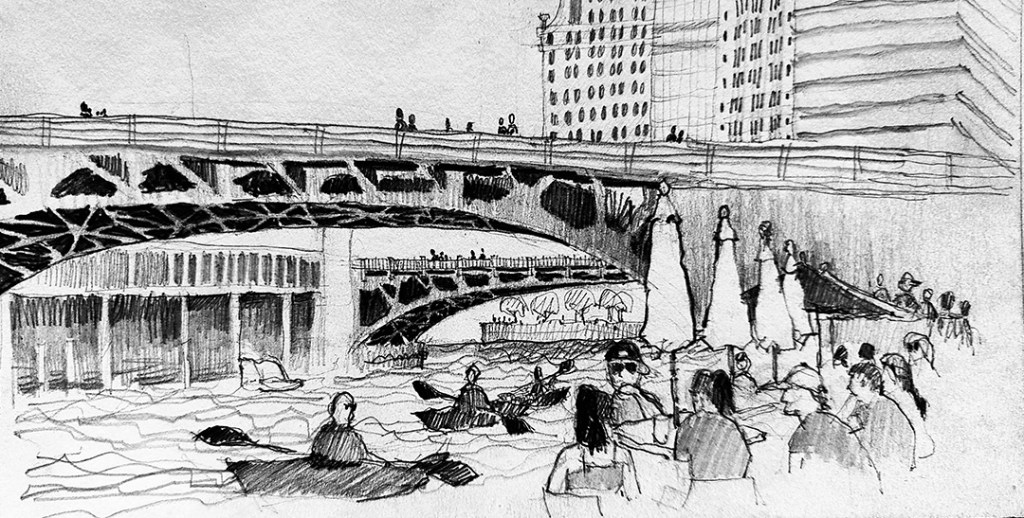
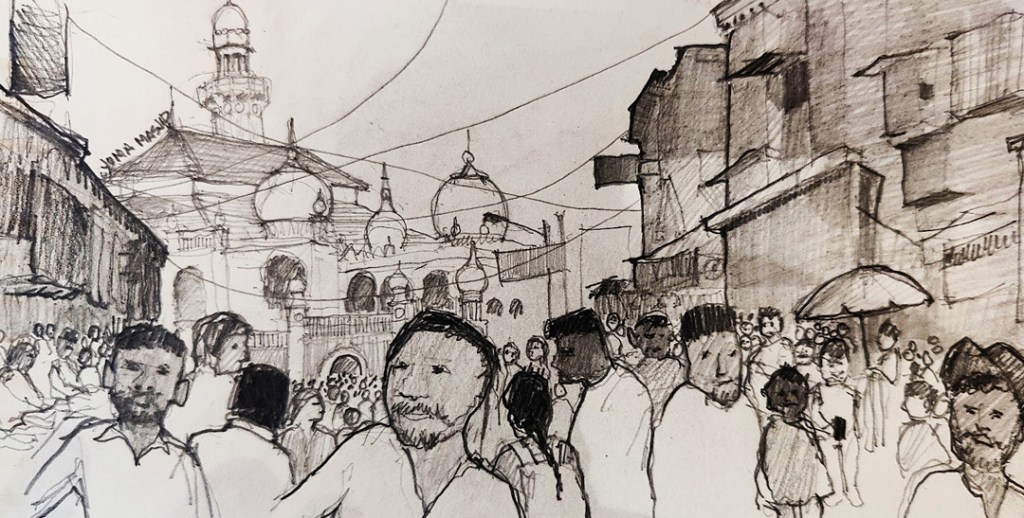
Create great compositions with high contrast in “The Value of Composition.” Joel Berman will show participants how to quickly map out the fundamental elements of the sketch at the beginning of the process in order to cultivate an extraordinary final sketch. The course will stress a formulaic approach to developing compositions, using thumbnail studies with immersive exercises in value and contrast.
Distance to sketching location: 1.5 miles
Average walking time: 40 minutes (includes walking to various sketching locations during the workshop)
Learning Goals
In this workshop, participants will:
- Learn or improve upon the following freehand sketching skills and techniques: composition, and value and contrast.
- Improve the ability to document and remember the existing built environment through specific sketching exercises at Chicago locations that enhance quick composition and drawing technique.
- Learn how to draw faster and with more confidence through a series of speed sketching exercises.
Supply List
- Pencils: 3b / hb / 2h
- Pencil Sharpener
- Black Sharpie
- 8 1/2 x 11 drawing paper pad
Optional Supplies
- Pens
About Joel
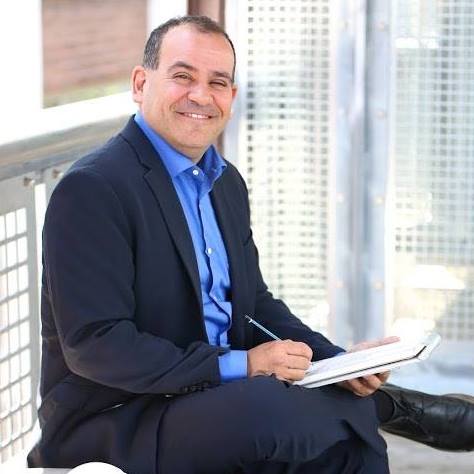
Joel Berman is the founder and president of Berman Design, a nationally recognized Chicago-based architecture firm specializing in retail, hospitality, and restaurant design. Joel’s expertise encompasses hospitality, retail franchise prototypes, commercial kitchens, and adaptive reuse projects.
Joel emphasizes the value of clear and rapid sketching in the design process. He is a seasoned educator, having taught architectural sketching at renowned institutions such as The Chicago Architecture Center, Urban Sketchers Chicago and Urban Sketchers Nagpur India, Andrews University, Columbia College, The Ontario Association of Architects [OAA], the Alberta Association of Architects [AAA], the Architects’ Association of New Brunswick [AANB], and the Royal Architectural Institute of Canada [RAIC].
Find Joel online at:
Facebook: Joel Berman
Instagram: @bermansketching
Web: BermanArchitecture.com, BermanSketching.com

Description
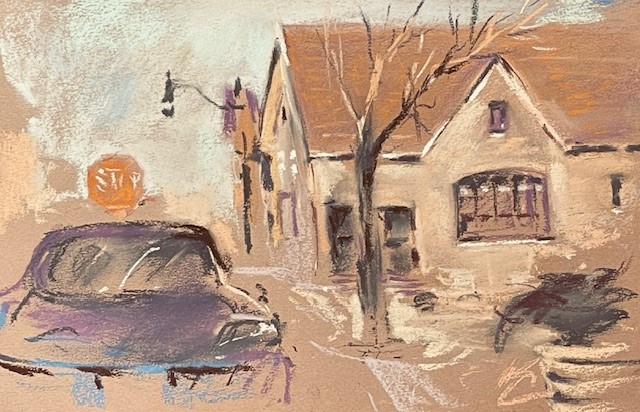
Experience the joy of using soft pastel sticks to create quick, powerful urban sketches. You’ll go directly from pigment to paper as instructor Ken Czech shows you how to employ various techniques to achieve desired effects. Suitable for beginners as well as experienced pastel artists, participants will learn mark-making, composition and styles of approach for subjects including buildings, landscapes and people.
Distance to sketching location: None
Average walking time: None
Learning Goals
In this workshop, participants will:
- Learn about various pastel applications and techniques, including mark making
- Learn composition and approaches for various types of urban sketching scenes and subjects
- Explore pastel versatility and how to create sketches that range from moody and impressionistic or descriptive and intricate
Supply List
- A selection of soft-pastel sticks, maybe 6-8, including lights and darks
- Small sheets of pastel paper cut to size (about 8×10)
- Stick of vine charcoal for sketch layouts on paper
- A sketchbook with a stiff cover or backing board to support the paper
- This is a new course; more supply details to come
About Ken
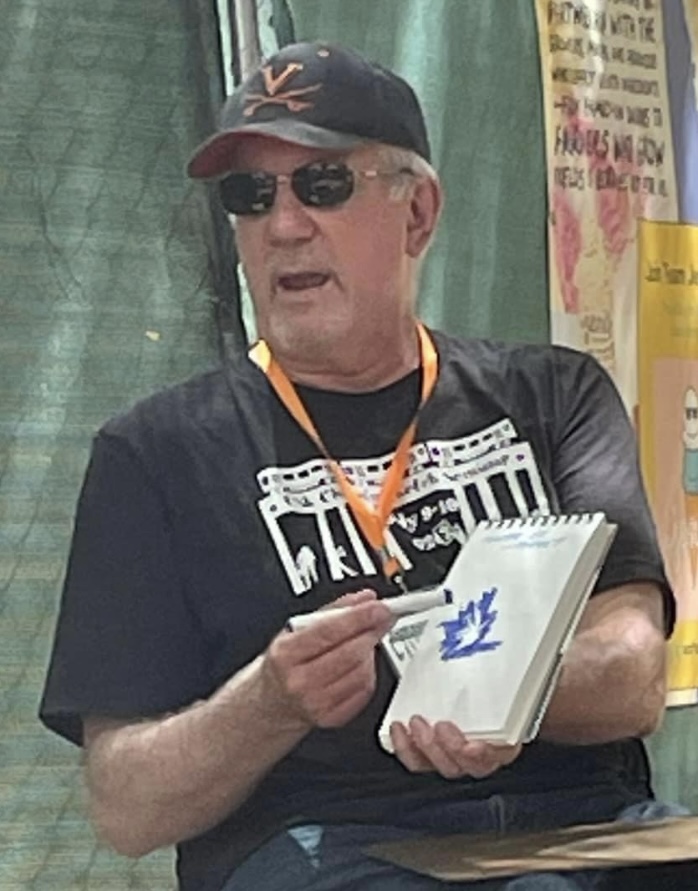
Ken Czech taught his popular “Marker Mashup” USK Chicago workshop for the past two years, and he enjoyed the exchange of ideas and techniques with participants.
A Senior Structural Designer with International Paper, he designs corrugated retail displays for various clients including: Anheuser Busch, Jim Beam Brands, PepsiCo/Quaker, Mars/Wrigley, Lowe’s, Home Depot, Office Depot, and Smithfield Meats.
A graduate of American Academy of Art, Chicago with a major in Graphic Arts, Ken took full-yearcourses in Art Fundamentals, Life Drawing, Advanced Life Drawing, Lettering Design, Architectural Rendering, Illustration and fine-art Watercolor. After graduation, he continued with courses in portraiture/pastels and is still pursuing his fine-art interests with live-model figure drawing and portrait-work.
A past member of Oak Park Art League and Studio 215 Evanston, Ken’s work has been featured in past exhibitions and he has served as guest artist and instructor for both organizations. Ken is currently a member of South Elgin Art Group and has figure and portrait commissions in private collections across the country.
Description
Urban sketching is more than just drawing; it’s a unique way of engaging with the world around us. From iconic cityscapes to hidden gems tucked away in alleyways, urban sketching captures the spirit and character of a place like no other. In this workshop, Kris Van Stockum will show you how to demystify the art of sketching, breaking it down into manageable and enjoyable steps. You’ll delve into the essential techniques that form the basics of urban sketching, starting with foundational skills and mindset needed to tackle any urban landscape.
If you’re new to urban sketching and want to learn easy-to-understand steps, capture the energy of the urban environment and develop confidence in your sketching abilities, you’re in the right place. Let’s dive in together and discover the exhilaration of sketching confidently on location!
Distance to sketching location: .3 mile
Average walking time: 7 minutes
Learning Goals
In this workshop, participants will:
- Understand the building blocks of an urban sketch
- Learn how to translate what we see onto paper without getting overwhelmed with details
- Play with composition, adding light and shadow
- Learn how to work quickly to capture the essence of an urban scene.
Supply List
- Sketchbook or 2-3 loose sheets of watercolor paper (no bigger than 8×10); 140 lb paper works well
- Watercolors – any existing palette will work
- Water brush or conventional watercolor brush
- Spray mister filled with water
- Container for water (for the watercolor part of the workshop)
- Waterproof (not permanent!) fine liners, such as Micron. I like Micron’s PN nib.
About Kris
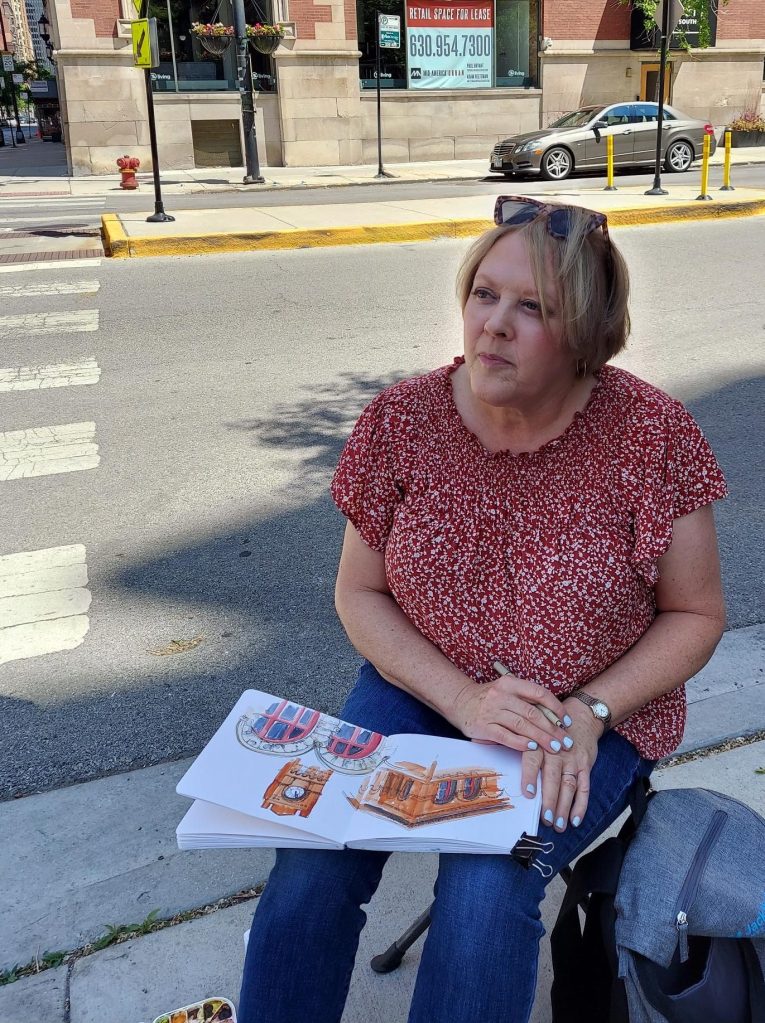
Kris Van Stockum believes an urban sketch doesn’t need to be perfectly drawn . . . a phrase she uses often with her students is “it doesn’t have to be accurate – it just has to be believable”. She brings encouragement and enthusiasm for the process to her classes, and nurtures all levels of learners, especially beginners. In her own work, Kris uses watercolor, pen and ink and occasionally collage. She’s been part of USk Chicago since 2016, volunteering in different capacities. Her love for urban sketching goes beyond the lines on paper – it’s a lifestyle, a mindset, and an invitation to find joy in every stroke. She earned a degree in Interior Design from Miami University (Ohio) and works as a sales representative, traveling bi-weekly and bringing her sketchbook with her to squeeze in a quick sketch when possible.
When not sketching or playing with her vast collection of art supplies, she loves to cook (especially desserts), play pickleball and spend time with her family. She’s a native of the Chicago area. One of her favorite places in the Chicago area is the Chicago Botanic Garden. She visits several times a month; whether to sketch, take a long walk or learn something new.
Find Kris online at:
Facebook: Kris Van Stockum
Instagram: @krisvanstockum

Description
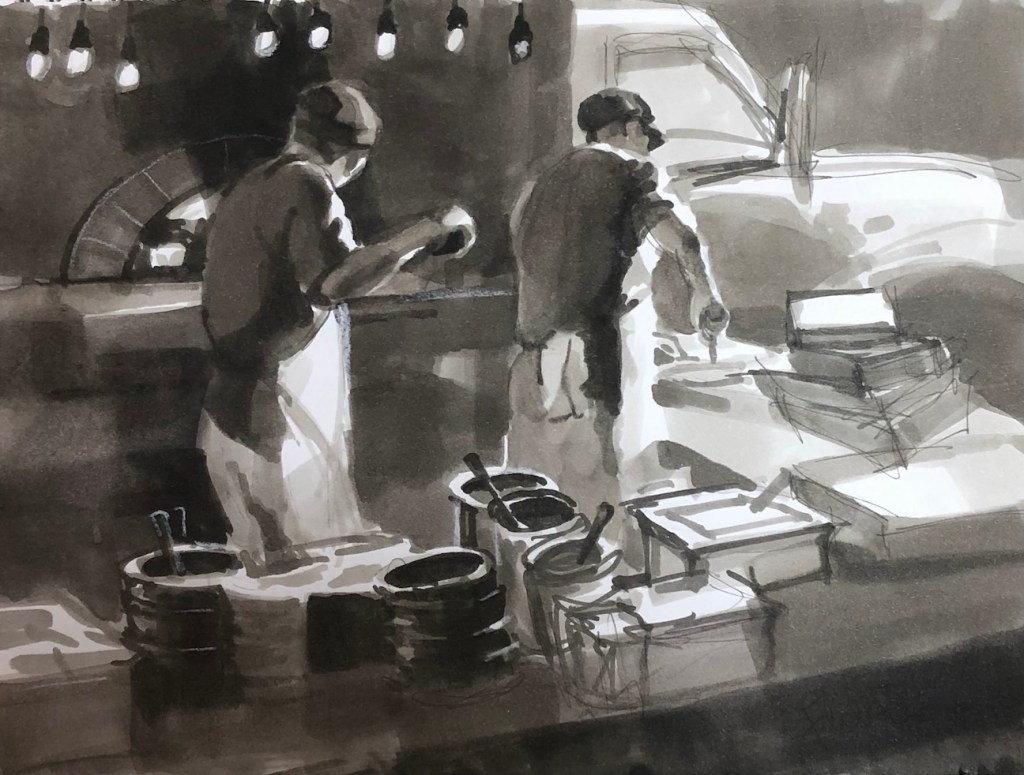
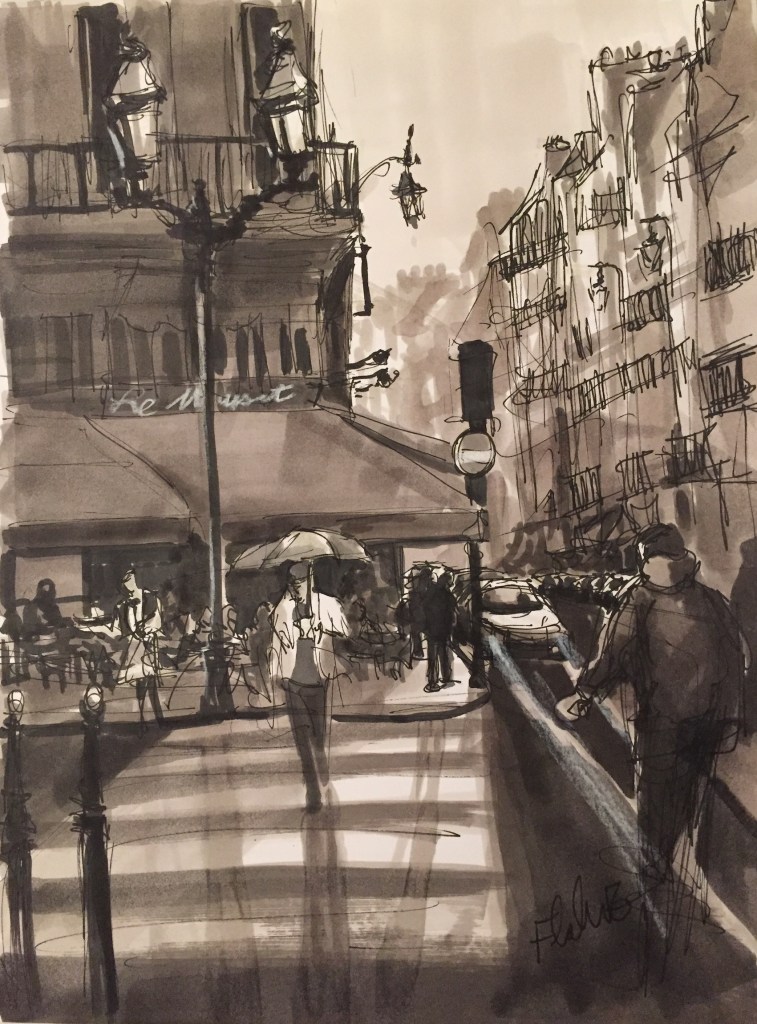
Chicago is a vibrant city overflowing with wonderful things to sketch, but sometimes those details can be overwhelming, especially when working in ink. In this workshop, instructor Lisa Flahive will focus on creating energetic sketches of lively urban spaces without using an eraser. You’ll use bold markers to loosen up and lessen our fears. You will experiment with loose, flowing lines to get a sense of what Chicago feels like, rather than get bogged down in excessive detail.
Distance to sketching location: 0.3 mile
Average walking time: 6 minutes
Learning Goals
In this workshop, participants will:
- Learn to confidently capture the energy of a neighborhood by using dynamic composition with a focal point
- Create line and simple shapes
- Develop a strong sense of value
- Learn how to use connected shapes to unify the sketch
Supply List
- Sketchbook
- One or more technical pens (black ink)
- Markers – black and two or more gray values
Optional Supplies
- The instructor will demonstrate with Copic Wide Markers and Pitt Big Brush markers but participants may bring any sketching material that allows them to create a range of values.
About Lisa
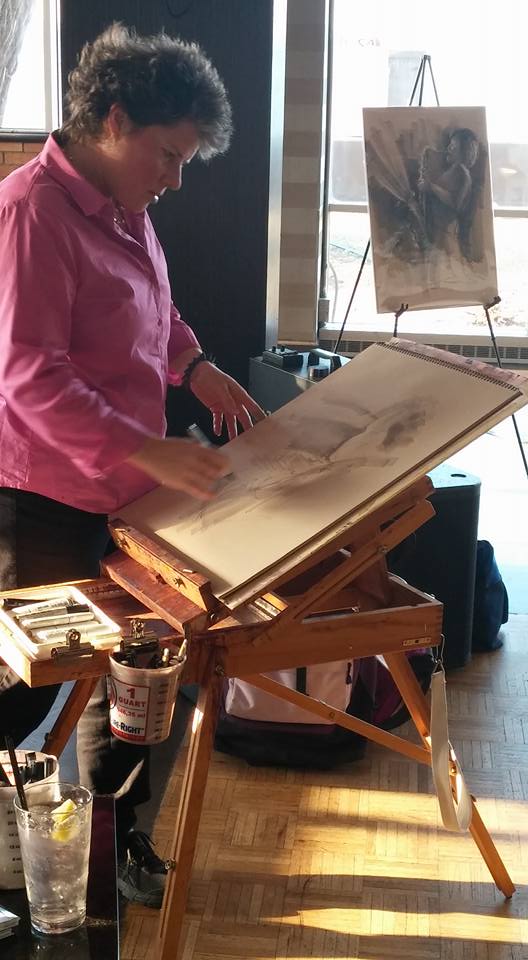
Lisa Flahive is most widely known for her expressive drawings and watercolors of jazz musicians, created live, in the moment, on the bandstand. This allows her to improvise, react, and communicate with the musicians. She chooses watermedia because it reflects the life of the music and must be created boldly, in the moment.
Lisa paints what inspires her, such as cafes or chefs in the kitchen. She also loves to capture the energy of a city in her vibrant street scenes, and paints many en plein air, at night. Lisa is the artist in residence for Chateau Chantal Winery in Traverse City, Michigan and paints live on the bandstand every Thursday during their popular Jazz at Sunset series. She also paints the Jeff Haas Trio live every Wednesday at The Union in Northport, Michigan.
A popular instructor, Lisa enjoys demonstrating her techniques in urban sketching and watercolor. She finds the most rewarding part of teaching these workshops is encouraging other artists to find their own voice. Lisa’s work can be found in homes, hotels and businesses throughout the region, and was featured in Blick Art’s Fall Sales Flyer 2015.
Find Lisa online at:
Web: lisaflahive.com


Description
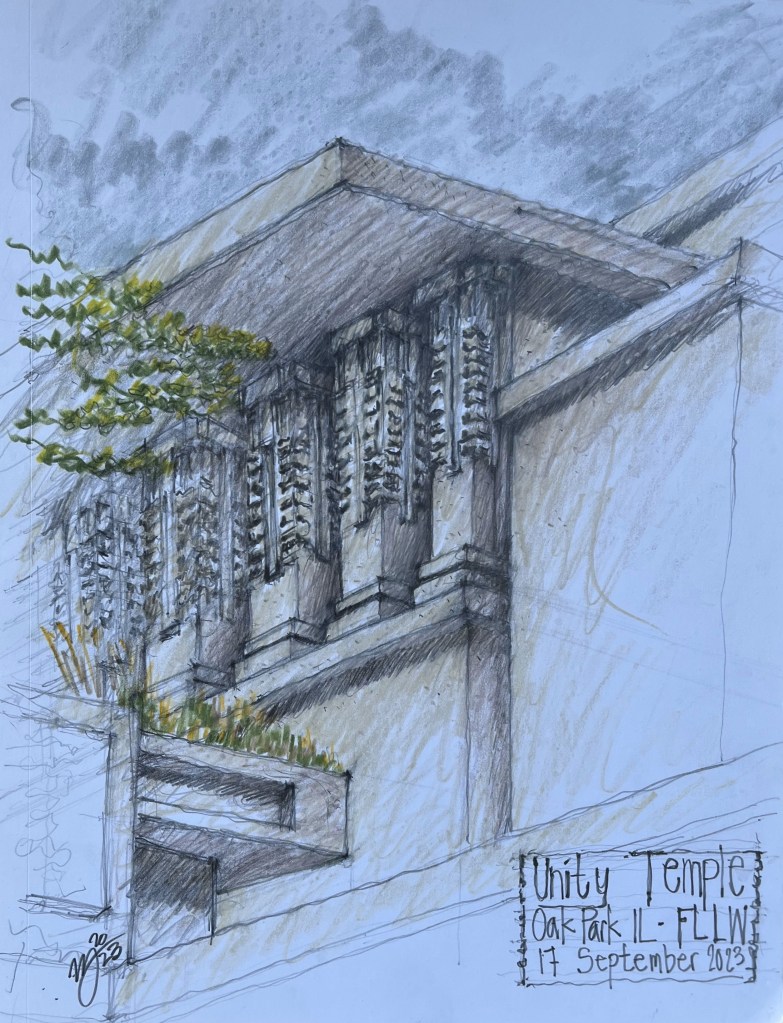
Interesting elements such as doors, windows, trim, ornament, and portions of a building can get overlooked while sketching the entire structure. In this workshop, Instructor Mark Jones will show how to focus on sketching building features. Capturing these elements on a larger scale or simply by themselves creates an emphasis on them and creates a different perspective and subject focus.
Distance to sketching location: 0.1 mile
Average walking time: 1 minute
Learning Goals
In this workshop, participants will:
- Learn how to observe and focus on the different building elements.
- Learn how to capture the character of a building without having to draw the entire building
Supply List
- Participants are encouraged to use the format and materials they are most familiar with
- Sketchbook
- Small stool or chair
About Mark

Mark is a Chicago architect with nearly 40 years of urban sketching experience. Learning and practicing sketching was required when Mark was in architecture school at the University of Illinois at Chicago, and students were encouraged and required to maintain sketchbooks during classes, filling the books with project ideas and designs, sketches, class notes, inspiration and urban sketches. A study abroad program in Versailles, France provided the focus to document his travels and studies through Europe.
Mark has continued the practice of urban sketching and joined Urban Sketchers Chicago in 2014. He has participated in or taught at each of the USk Chicago Seminars and has led sketching workshops for Mercy Housing and Thresholds. He has exhibited at the 2018 and 2019 Outside the Practice – Artwork Created by Architects and Designers, the 2023 Sweet Home Chicago and 2023 Ornament Is exhibit, all at the Bridgeport Arts Center. He has exhibited at the 2022 Rivers Edge exhibit at the Chicago Architecture Foundation and presented his sketches at the 2023 Pecha Kucha slide exhibit at Martyrs.
Mark is active in Urban Sketchers Chicago and the EveryOther sketch group and resides on the northwest side of Chicago.
Find Mark online at:
Instagram: @markjones4125
Description
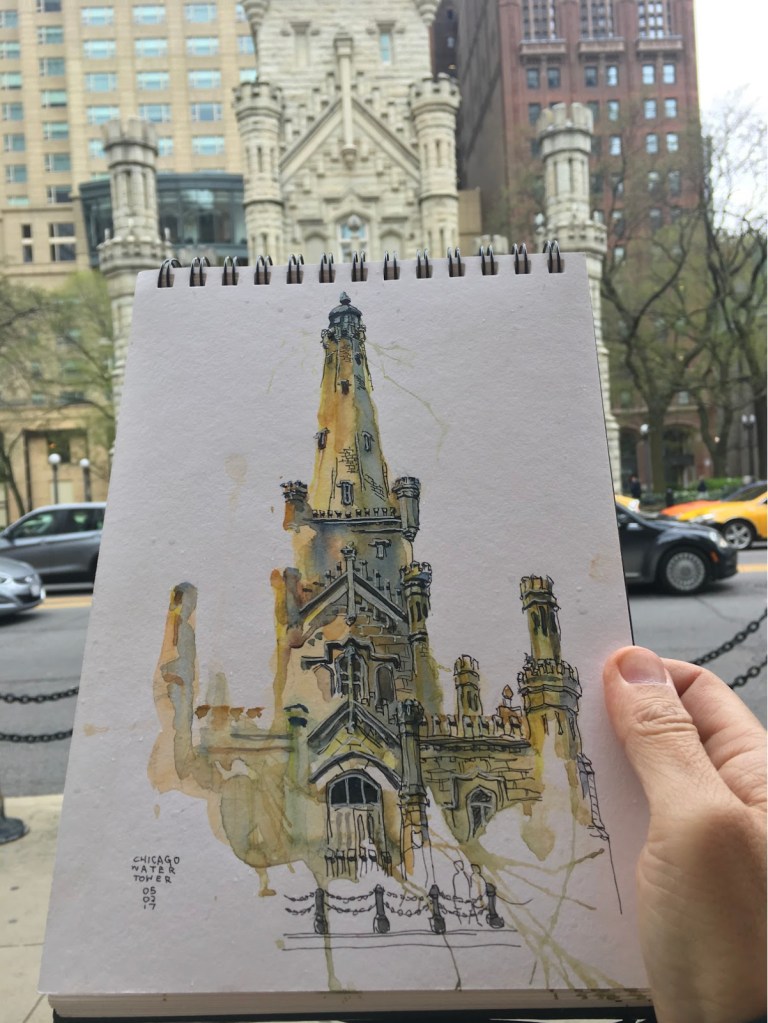
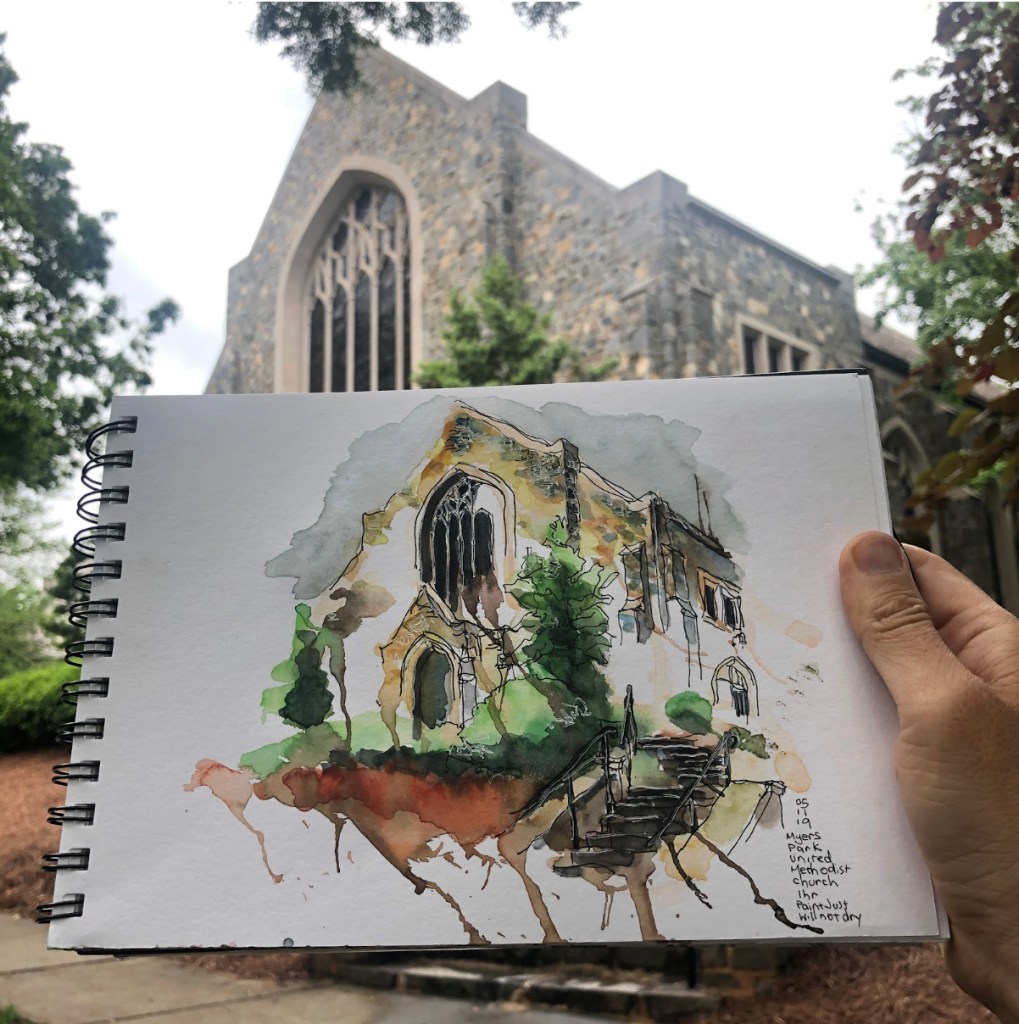
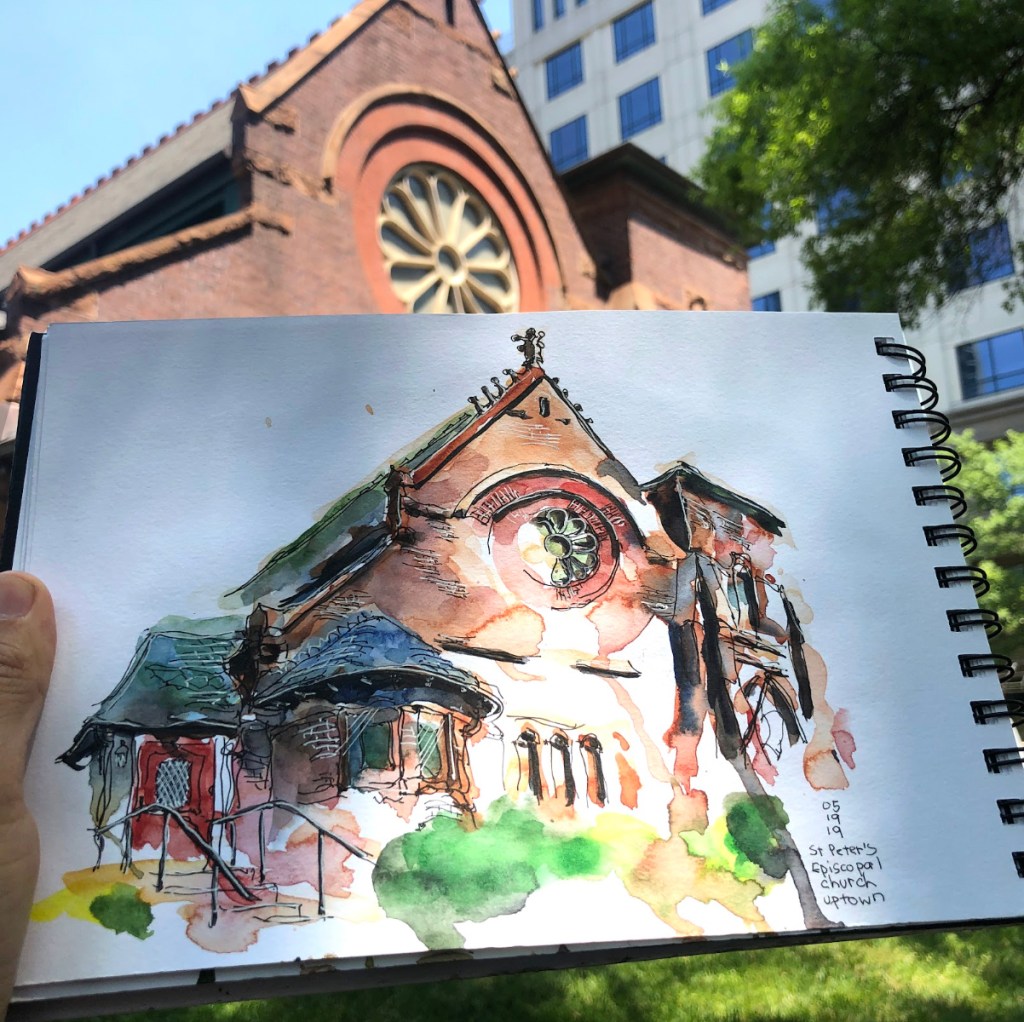
Sketching a complex scene can be intimidating, but the COLOR First Ink Later approach from Mike Daikubara can make it easy to create vibrant, dynamic and fun sketches! Instead of line work followed by adding color, broad watercolor washes of loose color are applied first using a mop brush and line is added later. This approach ultimately makes it easier and less intimidating to get started and you’ll quickly find that the colors will perform their magic by mixing on their own on the paper. Once the initial layer of the color wash has dried, the sketch is brought to life with ink, additional colors and highlights– all using limited tools in a limited amount of time. The workshop is based on the sequel to Mike’s book “Sketch NOW Think LATER,” and is perfect for beginners as well as more for more experienced sketchers.
Distance to sketching location: .3 mile
Average walking time: 7 minutes
Learning Goals
In this workshop, participants will:
- Learn how to immediately jump into a sketch with broad watercolor washes without hesitation
- Learn to stop trying to control detail by applying colors first in direct water color
- Discover how colors will help you add ink in the following phase
- Bring focus to the sketch story line work, additional colors and highlights, resulting in a rewarding sketch
Supply List
- Sketchbook with paper thick enough to be able to handle lots of water. My personal favorite is the Stillman & Birn Beta series with thicker paper appropriate for use with water media.
- Pen – Waterproof ballpoint pen, felt tip pen or fountain pen. I enjoy using the Uni Ball Signo 0.38 Black pen
- Mop brush – My favorite is the Davinci #2 mop brush but any brush that can hold lots of water works well.
- Small water container ( I use a Nalgene 2 oz container but any small container/ jar will work)
- Water brush – One brush will easily last a couple of years! Medium tip is a nice size.
- Grey brush pens – Tombow brush pens (N75, N65, N55) are perfect for adding 3 grey values
- White ink – Sakura Gelly Roll and Uni Posca White
- Watercolor kit – Any water kit is fine, but if you do not have one, a nice intro kit can be purchased from Sakura Koi. I used the Koi for years, but then later have continued to use the outer case with colors removed and with new colors added in from Holbein.
Optional Supplies
- All of my personal favorite Urban Sketching supplies are listed here:
Miked’s Urban Sketching Supplies (Amazon)
About Mike
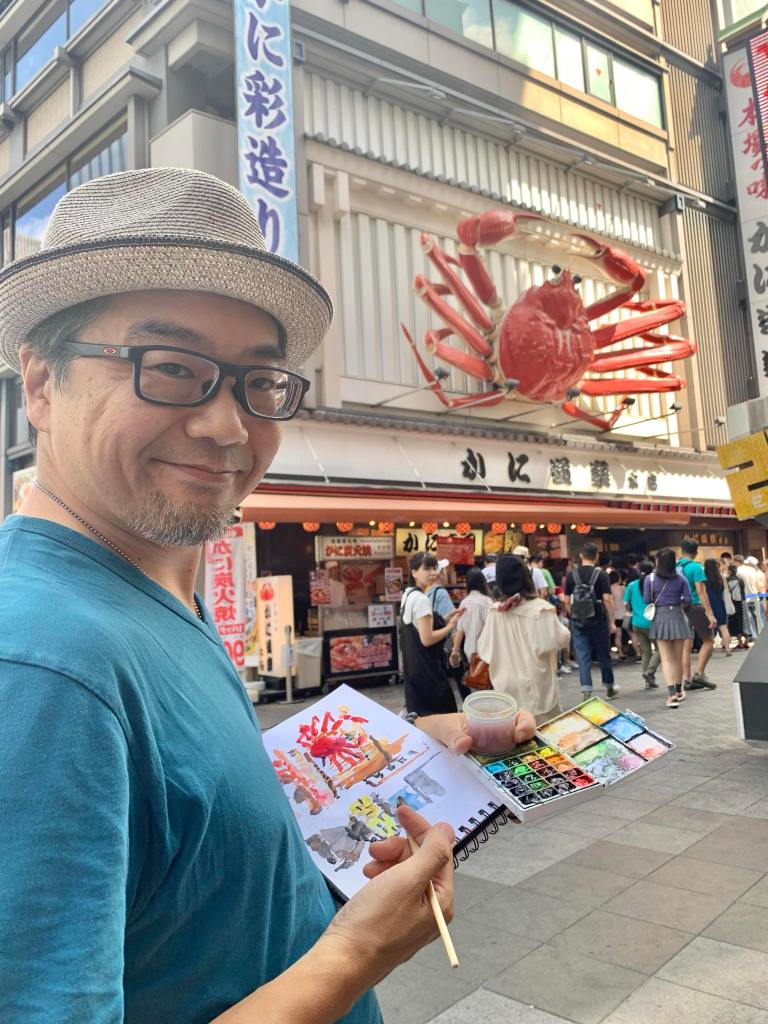
Mike Daikubara began carrying a sketchbook in 2000 to be able to communicate better and faster at his design day job. Now he sketches daily to see, understand and enjoy! A Japanese-American, Mike grew up in Tokyo and New York City attending an International school with kids from all over the world.
He is an Industrial Designer with decades of experience in various industries such as Cosmetics, Consumer Electronics, Bath/Kitchen Products, Medical, Juvenile industry and Major Appliances for the home.
Find Mike online at:
Facebook: Mike Daikubara
Instagram: @mikedaikubara
Description
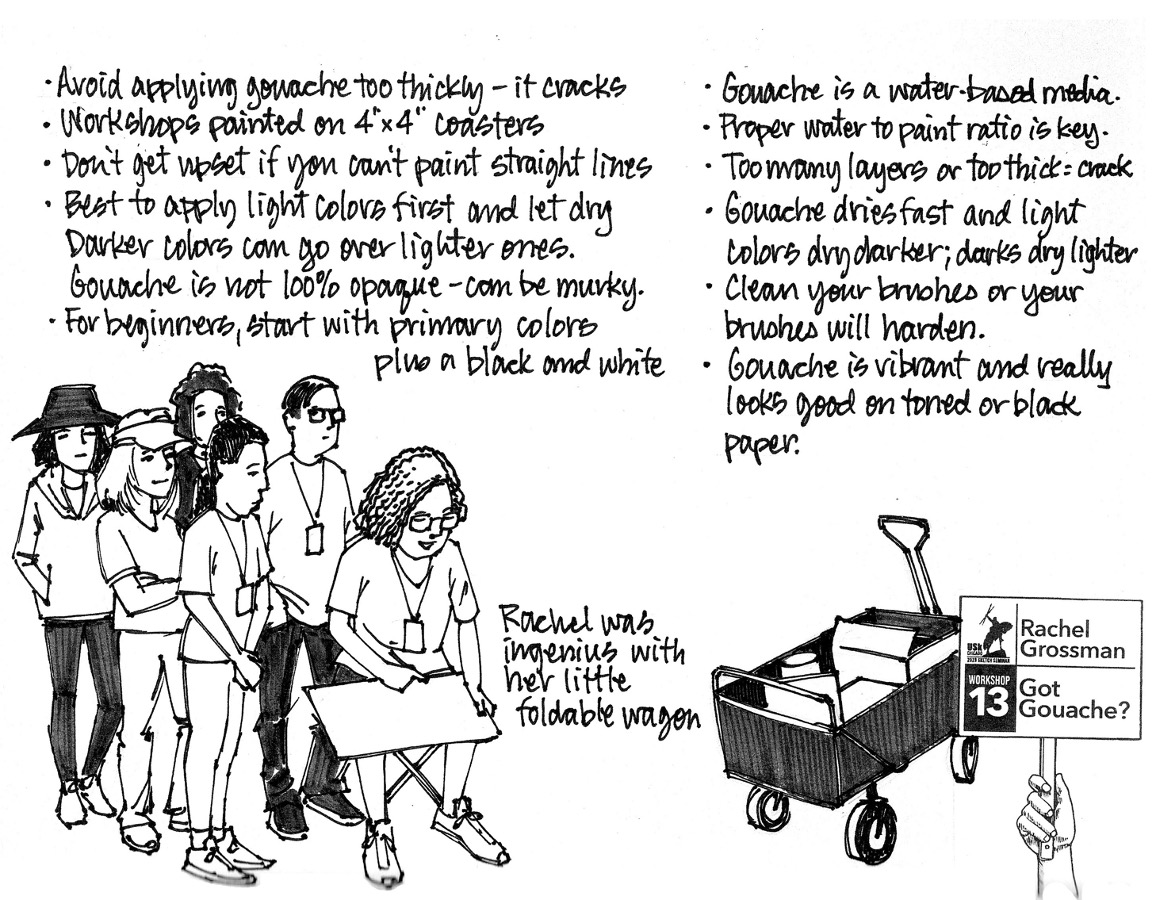
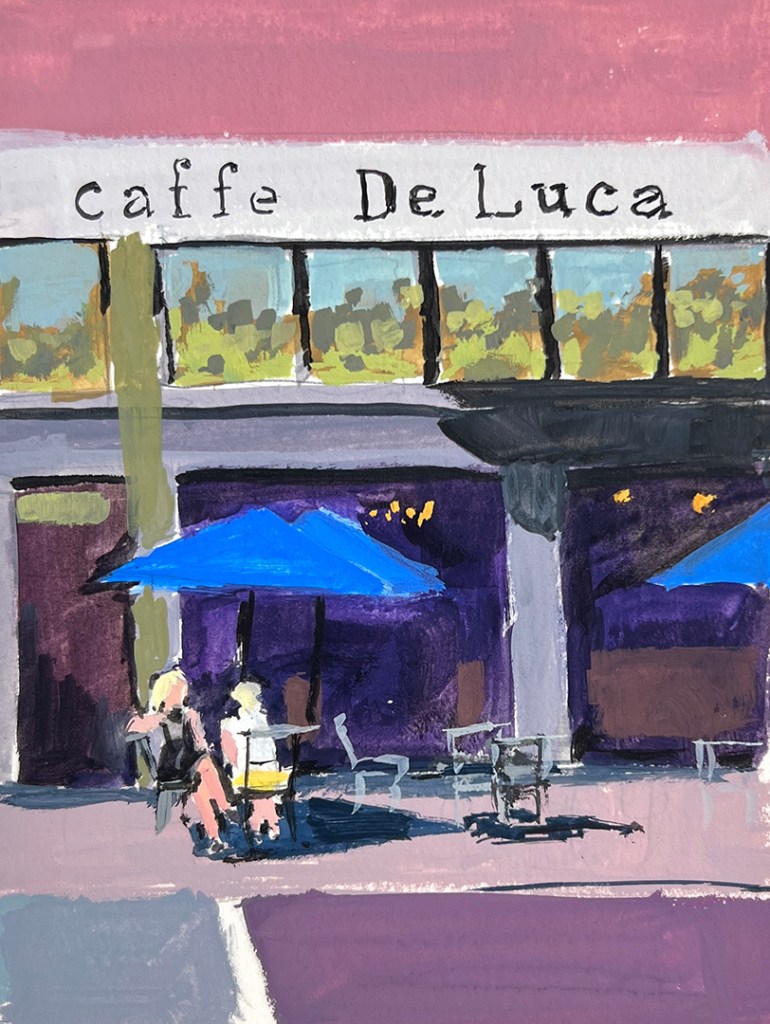
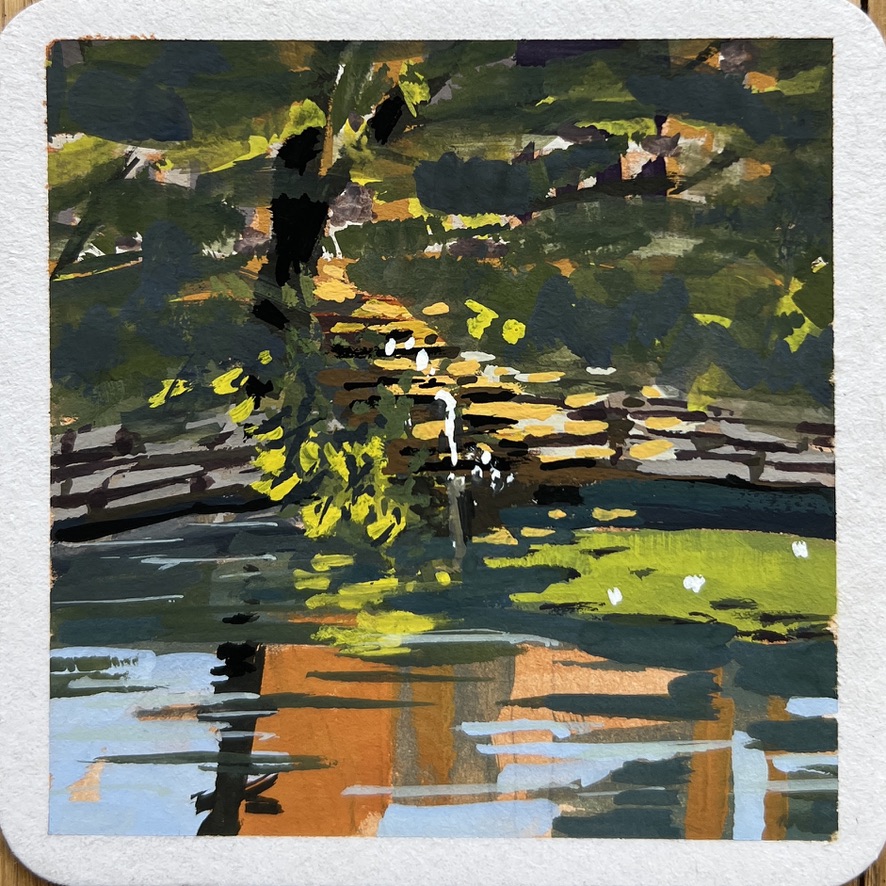
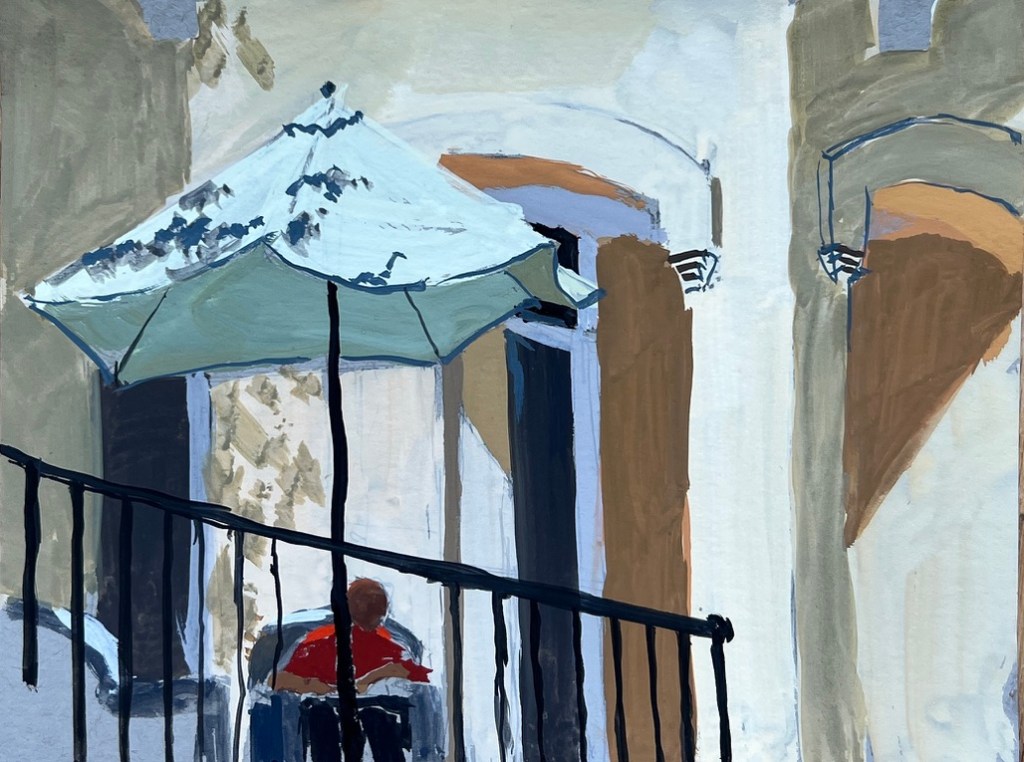
Gouache is an amazing medium for urban sketching, and instructor Rachel Pasch Grossman returns to show participants about its excellent qualities. With just a few exercises and tips, you will learn about the quirks as well as the advantages of gouache in capturing the urban landscape quickly and confidently.
Distance to sketching location: 0.1 mile
Average walking time: 1 minute
Learning Goals
- In this workshop, participants will:
- Learn how to control the all-important paint-to-water ratio
- Discover how to approach a scene thinking about shape instead of lines
- Understand the pros and cons of gouache as a medium, especially for urban sketchers
Supply List
- Large sketchbook with minimum 100 lb (150 gsm) paper
- 3/4” flat synthetic brush and small round synthetic brush
- Tubes of gouache: yellow, ultramarine, alizarin crimson, burnt sienna, white (Winsor & Newton, Daniel Smith, Holbein, or M Graham)
- A small stool or chair
In this class, I loan each student a gouache setup, which includes a board, a palette, a water cup, some clips and a rag. I also give each student a few inexpensive cardboard coasters to paint on.
About Rachel
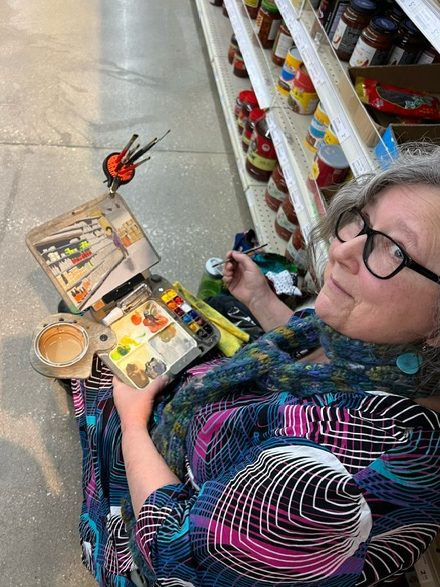
Rachel Pasch Grossman made the poor decision in college to major in what was hard (philosophy) instead of what she enjoyed (art). It took many years to undo that mistake, during which time she took art classes on the weekend, made posters for anyone who needed one, volunteered as an art parent at her childrens’ schools, quilted, knit, took photographs, and wished she was painting. About six years ago, she started sketching with a friend, and since then she has completed four years of daily sketching and is now half-way through her fifth. (Full disclosure: she did miss one day during the second year.) Daily sketching, much of it urban sketching, has become a joyful addition to her life.
Urban sketchers often use watercolor to add color to their sketches. Rachel tried, but never felt fully comfortable with watercolors. Gouache, on the other hand, felt much more intuitive: you could work from dark to light, without “reserving the white”, and the colors stayed where you put them instead of floating off to other parts of the paper behind your back. Since diving into gouache, Rachel has experimented with materials (substrates, brushes, and brands of paint), in addition to different ways of making gouache portable. She hopes that some of what she’s learned about gouache’s personality quirks will be useful to gouache newcomers.
Find Rachel online at:
Facebook: Rachel Pasch Grossman
Instagram: @paschpaint


Description
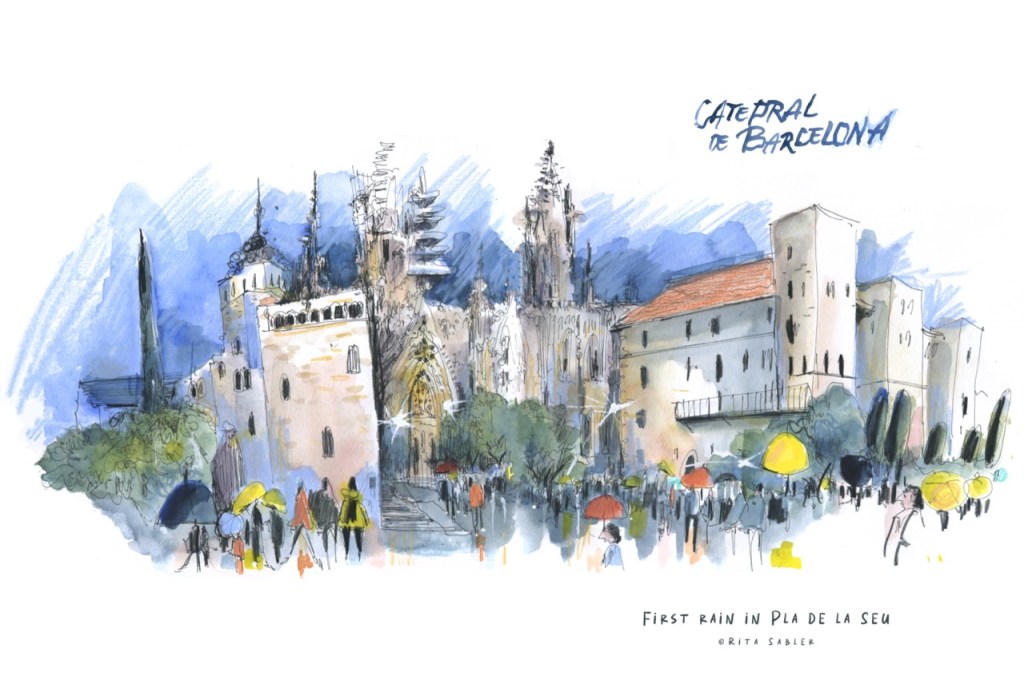
How do you tell a good story with limited time and tools while drawing in a busy place? In this workshop, instructor Rita Sabler will introduce you to the basic ingredients of a visual story and teach you how to put together one of your own using a simple formula. You will be learning how to capture the essence of what is going on using a handmade accordion sketchbook or a larger sketchbook spread.
Distance to sketching location:
0.2 mile
Average walking time:
4 minutes
Learning Goals
In this workshop, participants will:
- Get an overview of how urban sketchers can approach visual storytelling in this condensed introduction. A handout outlining the key concepts will be provided..
- Understand what makes a visual story
- Learn how to communicate the sense of place and time in drawing
- Choose a protagonist
- Learn one simple formula for choosing what to draw in order to tell a story
- Design and compose your story on a page or concertina
Supply List
- Favorite line making tools: Graphite pencil or black ink pens with waterproof ink (Artist Pitt pen by Faber-Castell or similar)
- Inexpensive sketch pad for quick studies and exercises (Clairefontaine Crok’ Book 8″ x 12″ Sketch Pad or similar)
- A sheet of watercolor paper that could be folded into a concertina (no bigger than 48 cm x 20 cm) or a landscape sketchbook with a double spread of at least 48 cm. Alternatively, students can create a concertina with these dimensions using small sheets of paper following this tutorial
- Pentel Water Brush with large round tip
- Portable watercolor box with lots of surface for mixing and favorite watercolors
- Watercolors (can be purchased in tubes and squeezed into half pans, student grade watercolors are fine)
Optional Supplies
- Color pencils, not watercolor
- Portable sketching stool
About Rita
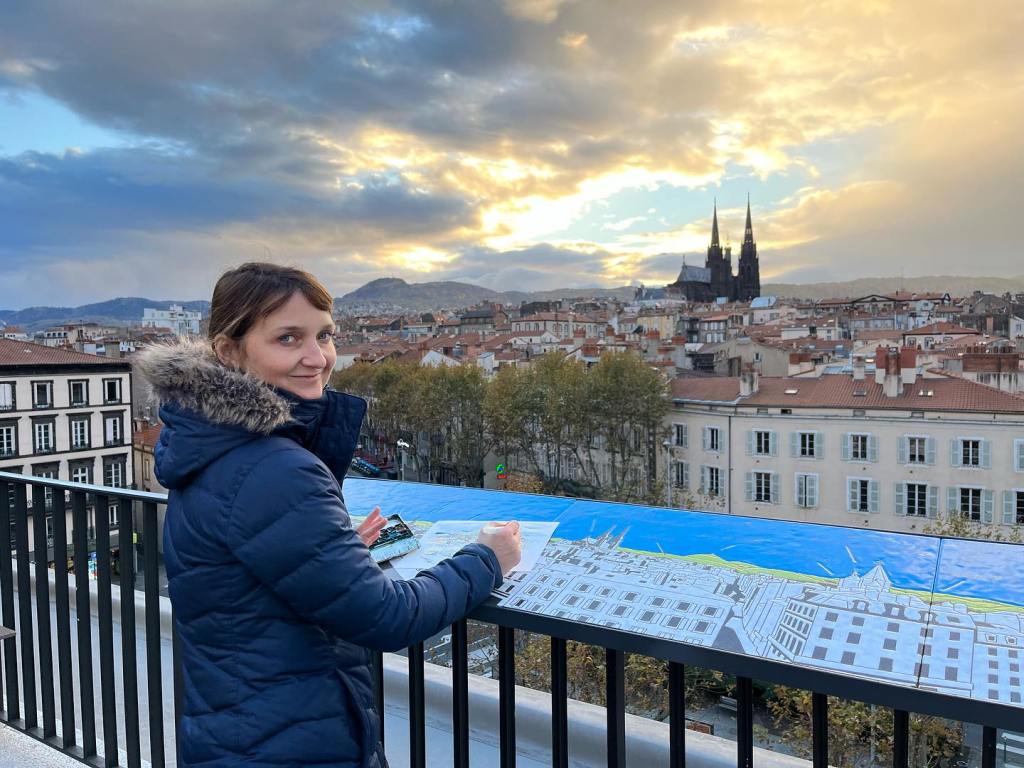
A visual journalist, artist, and educator based in Portland, Oregon, Rita Sabler teaches drawing, urban sketching and visual journalism courses at the Parsons School of Design, Pacific Northwest College of Art and Portland State University. She has presented numerous lectures and workshops around the world, inspiring diverse audiences to cultivate a lifelong passion for urban sketching and reportage illustration. Her work has been featured in solo and group local and international shows. In between, she works on drawing reportage projects. Rita Sabler has served as the Education Director on the board of the global Urban Sketchers organization since 2019.
Rita Sabler’s reportage on the Kalaupapa settlement has won Doctors without Borders Coup De Coeur and International Sketchbook Prize at the 2019 Rendez-Vous Du Carnet De Voyage in Clermont-Ferrand. Her recent book “Listening to New Orleans” has won another International Sketchbook Prize in 2023. Rita’s main areas of expertise are Reportage Illustration, Travel Sketching, and Visual Storytelling, but she is often seen on street corners capturing busy markets, festivals, protestors, musicians, and regular citizens living their life in both ordinary and extraordinary ways.
Find Rita online at:
Instagram: @ritasabler

Description
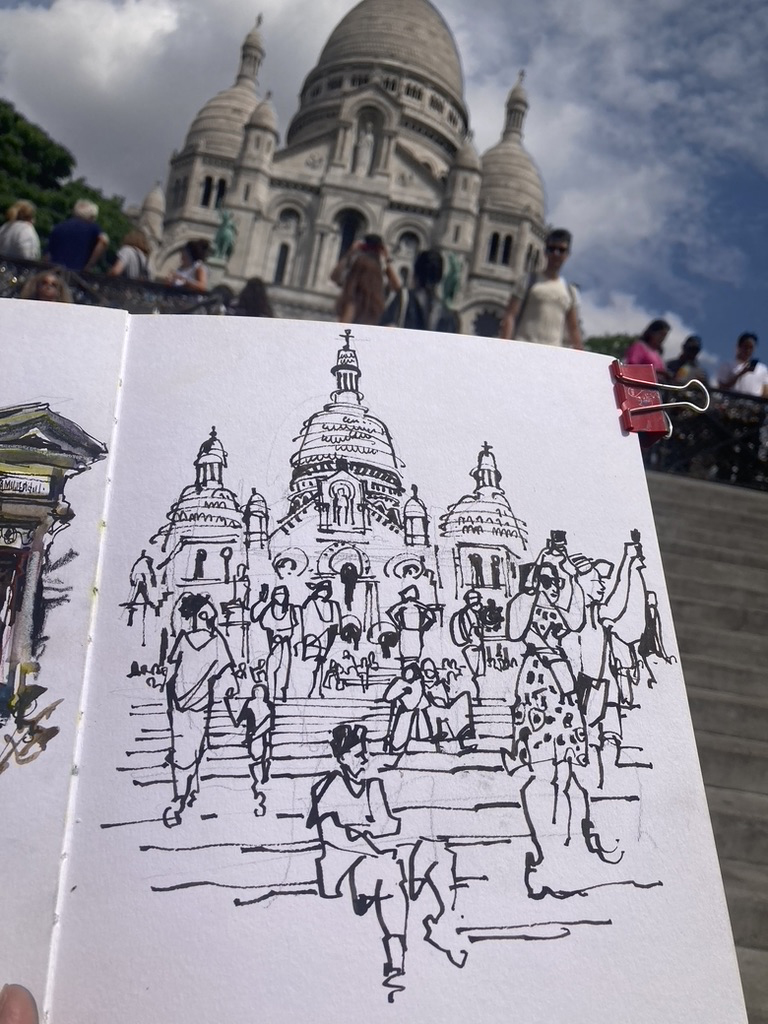
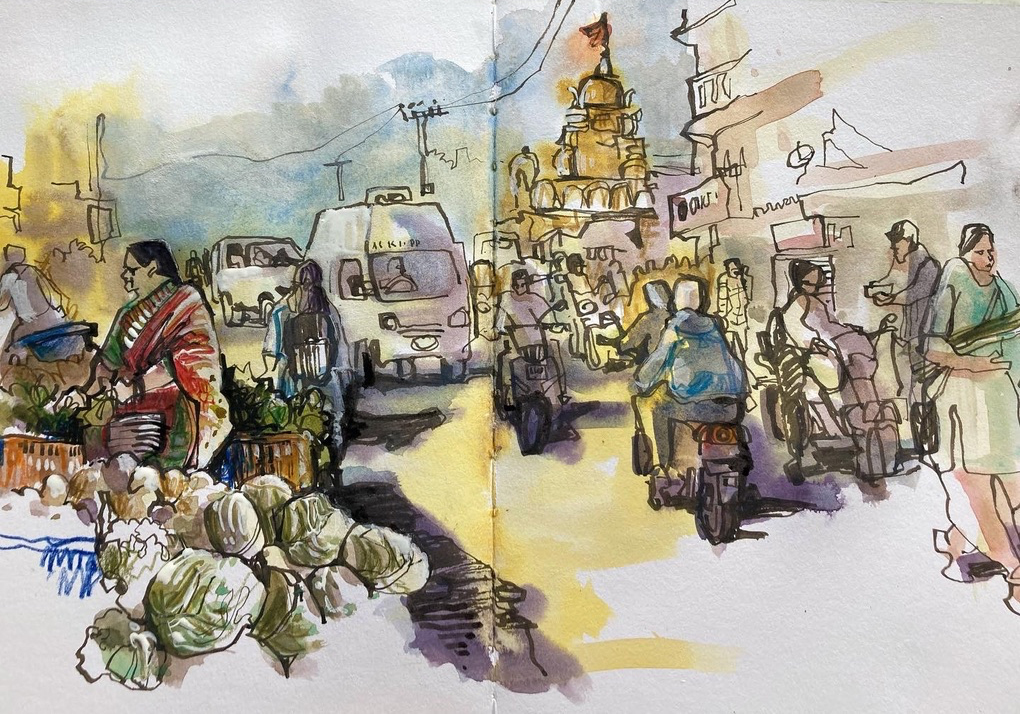
Learn how to draw people in motion in “Dynamic Stories with People Movement and Time,” a workshop from Suhita Shirodkhar that explores gesture drawing, basic proportions and perspective. We will sketch people’s movements and actions to capture dynamic stories that unfold over the passage of time.
Distance to sketching location: 0.2 mile
Average walking time: 4 minutes
Learning Goals
In this workshop, participants will:
- Learn how to draw people in motion, including gesture drawing, basic proportions and capturing bodies in motion.
- Explore drawing a crowd, including understanding a crowd in relation to perspective, relationships between people and the sketcher’s point-of-view
- Learn how to capture time in sketches, including overlapped figures, incomplete figures and one person in multiple poses to describe a sequence of actions. (This is a “stretch goal” that participants can grapple with if they want to take on an extra challenge.)
Supply List
- Your regular sketchbook
- Variable line tool – I like to use a brush pen, but you can also use a very soft (6B or 8B) pencil or any mark-making tool that makes thick and thin marks.
- Any pen with waterproof ink
- 3-4 colored pencils, any brand
- Any coloring medium – wet and dry media all work (I will use watercolor)
- For the final exercise I will hand out a larger sheet of paper for those that would like to explore a bigger sketch.
About Suhita
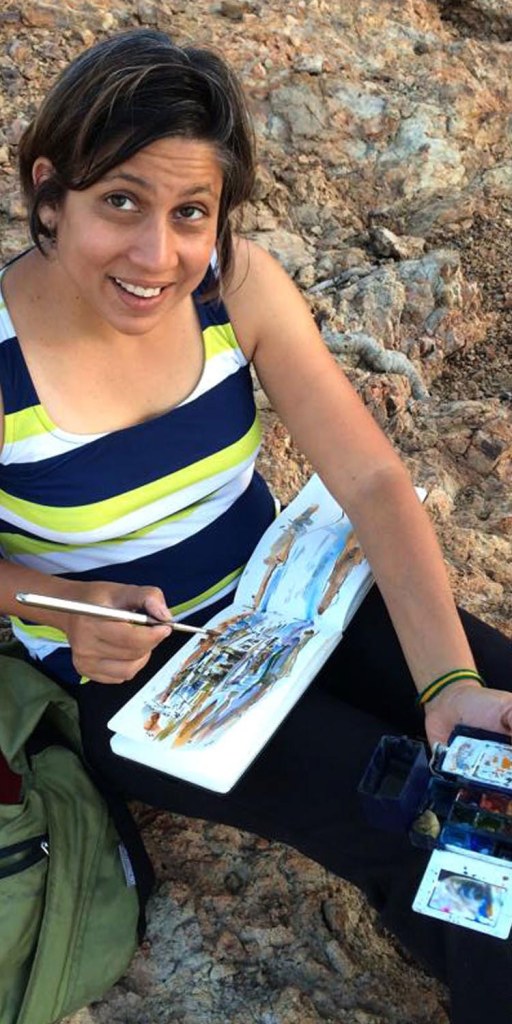
Suhita Shirodkar is a freelance illustrator and an educator who has been an active member of Urban Sketchers for over 12 years. She holds a Master in Communication design from Pratt School of design.
She teaches on-location and reportage sketching workshops year round in the US and abroad. She was correspondent for the Barcelona Symposium and has taught at the Paraty, Singapore, Manchester, Chicago, Porto and Amsterdam USK Symposiums. Suhita has been a blog correspondent and has served on the Editorial Team, the Facebook Page, the local 10×10 team and the Reportage Grants panel.
Suhita has received grants for her reportage work, including a Knight Foundation Grant and a Belle Foundation Grant. As 2023 Creative Ambassador to the City of San Jose, conducted a year-round series of sketch walks that combined sketching with stories narrated by local historians. Suhita is the author of a book on Urban Sketching for Beginners and a book on the vintage signs of San Jose, California.
Find Suhita online at:
Web: SketchAway.wordpress.com
Instagram: @suhitasketch
Description
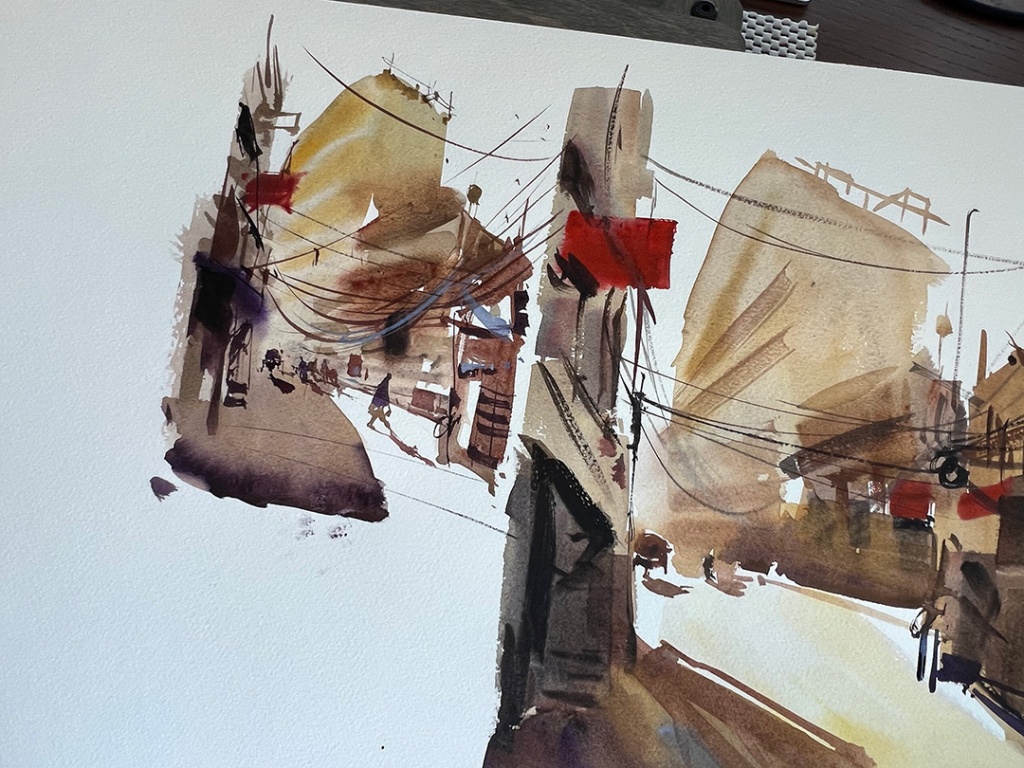
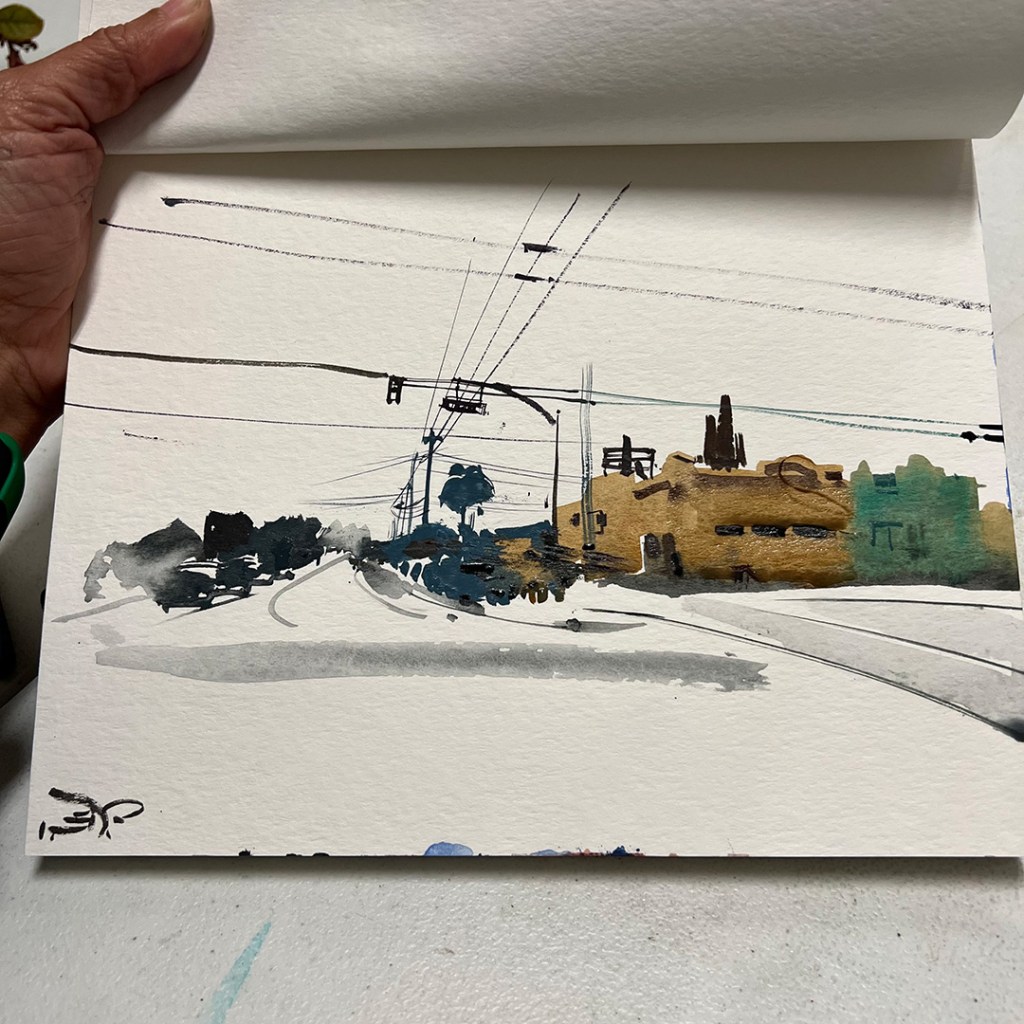
Thumbnailing is often called a beginner’s tool. This workshop by Uma Kelkar will revive its use as a valuable problem solving method, especially for sketchers who are overwhelmed or stuck in the process. At the end of the workshop, participants will have a “Manual for Experimentation” that can help them to restore their practices and get unstuck from either a confusing scene or too many choices. Because participants work with postcard-sized thumbnails, the sketch from start to semi-finished can be quickly repeated to unlock the thought process. This workshop is also open to digital artists.
Distance to sketching location: 0.4 mile
Average walking time: 8 minutes
Learning Goals
In this workshop, participants will:
- Learn how to pick the biggest shapes for the most attractive composition
- Show how to add distance (volume) to a sketch, even with just 2 large shapes and 2 colors
- Learn how to isolate either the focal plane or focal quadrant for the addition of highlights
Supply List
- This workshop is open to digital artists if they would like to participate (bring charged iPads).
- Sketching paper for initial pencil/marker sketches
- Watercolor sketchbook
- Pencil and Markers. If only getting pencils, get 4B/6B. Black markers, such as Tombow.
- Watercolors, limited palette preferred, tube paints (no cakes)
- Brushes: medium round (size 10 or 12) and a small round brush (size 2). Uma will use mops. For mop brushes, the size is #2 for the medium and 0 for the smallest
- Tube of white watercolor/gouache
- Stool
About Uma
Born and raised in Pune, India, Uma Kelkar has called San Jose home for the past 20 years. A watercolor painter and urban sketcher who also sketches in ink, gouache and on the iPad, Uma has taught at Urban Sketchers International Symposia (2017, 2018, 2019) and is author of Urban Sketching book for the iPad. She strongly believes in cross-pollination and borrowing ideas from various fields to improve sketching. She is an engineer by profession. She volunteered as Secretary on the Executive Board of Urban Sketchers from August 2019 to July 2022, taught at the USk Chicago Seminar in 2018 and conducted the Apple Sketchwalk with USk Chicago in 2019.
Uma has exhibited and won awards at 37 shows around the world, taught more than 45 workshops and conducted more than 25 lectures and demonstrations. She has also authored two books and contributed to six more. When Uma is not teaching art or engaging in making art, she is Founder-CEO of Vivify.ai, an AI startup that focuses on keeping humans in the creative loop. She holds Master of Science (EE) from Stanford University and Bachelor of Engineering from Pune University, India.
Find Uma online at:
Facebook: Studio Kelkar
Instagram: @umapaints
Website: umakelkar.com
Description
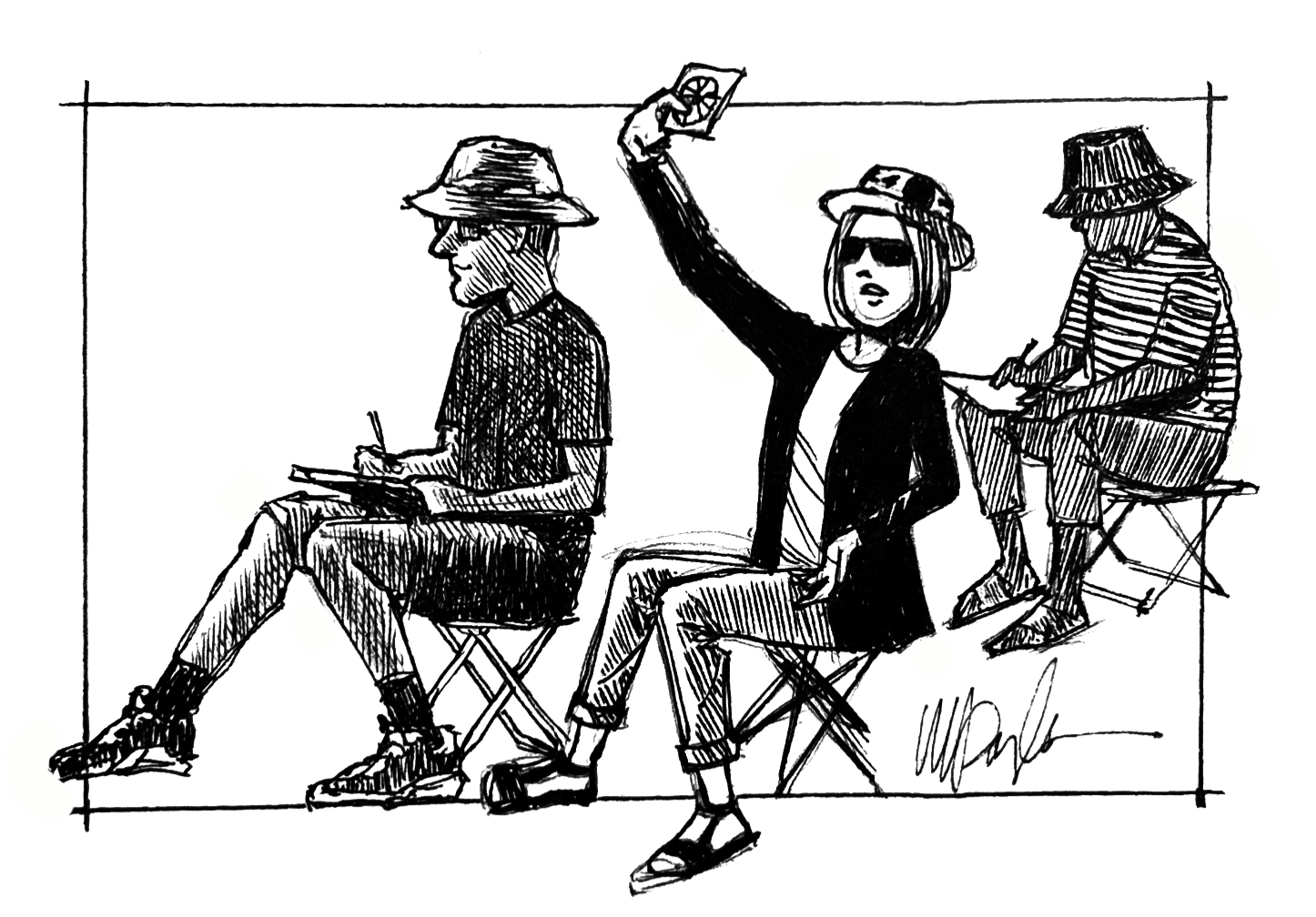
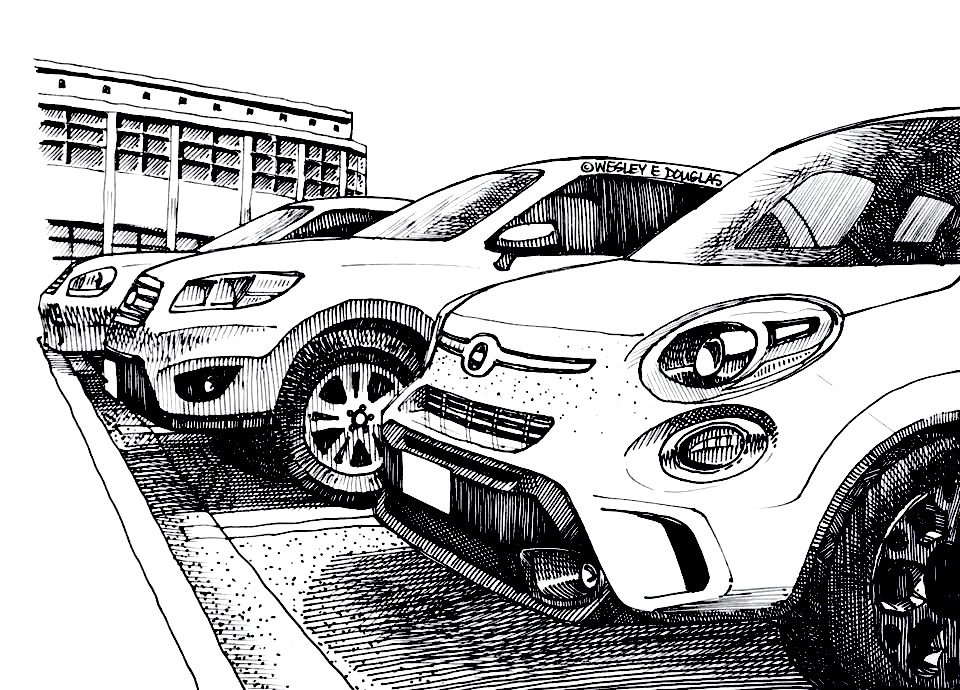
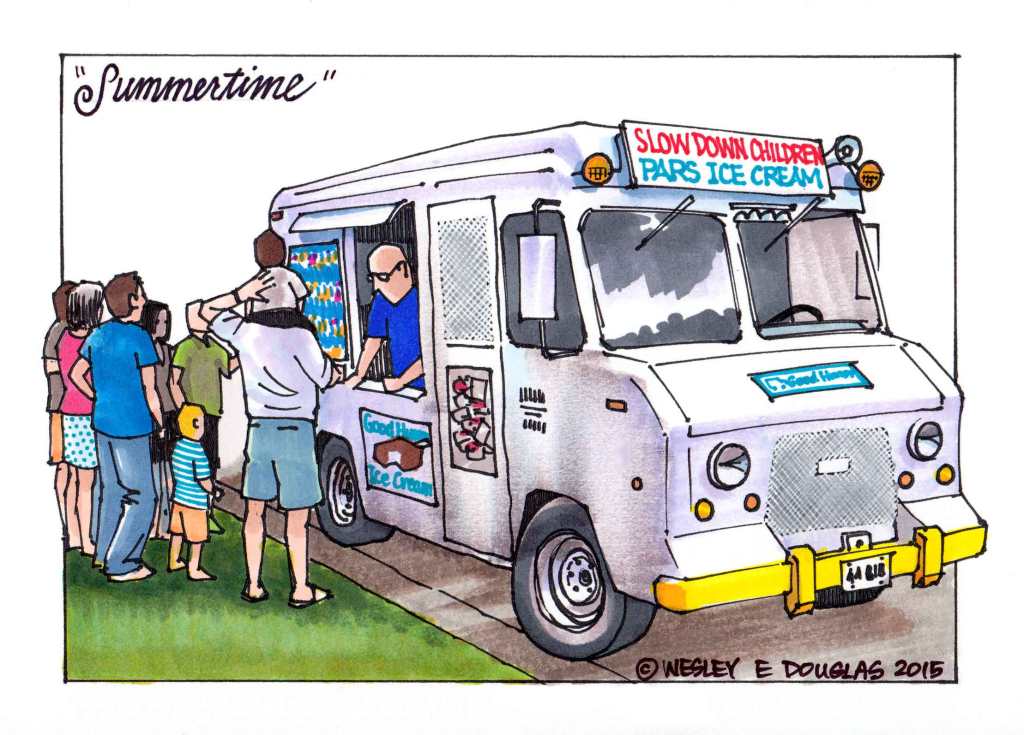
When urban sketchers capture the architecture and surrounding landscapes of an urban scene, vehicles are a very important member of the supporting cast. Vehicles in an urban setting may include cars, trucks, delivery vehicles, construction equipment and buses. Instructor Wes Douglas will show participants how they can add those urban vehicles to their urban sketches in a way that contributes to the personality and beauty of their drawings, without having to stress out about the specific make and model of the vehicle.
Distance to sketching location: 0.2 mile
Average walking time: 3 minutes
Learning Goals
In this workshop, participants will:
- Hone individual observation skills
- Apply the “Rule of 3s” to ensure proper vehicle proportions
- Select and analyze a vehicle to help match the angle with the view of the scene
- Learn how to sketch at different speeds to capture key details
- Magnify important details to help communicate the vehicle’s personality
- Build the art of storytelling through visual media
Supply List
- Sketchbook, at least 8” x 10” and something to draw with
- I use markers and will be happy to give tips and tricks to students wishing additional help with markers but if they are comfortable with pen and ink or watercolors, these will also work just fine.
- As with all Sketch Seminar workshops, some walking will be necessary.
- Portable stool
About Wes
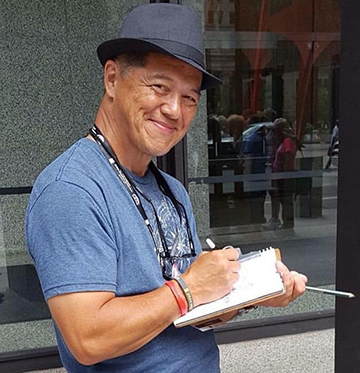
Wes is a professional designer, illustrator, graphic recorder and concept artist working in the Chicago area for the past 30+ years. He has created new concept designs for SC Johnson, Sara Coffee and Foods, Philips Oral Health, Allstate Insurance, Blue Cross Blue Shield of Michigan, CNH (construction and agricultural equipment) and many others.
A member and former co-admin for the Chicago chapter of Urban Sketchers since 2013 Wes, who admits to geeking out on cars and car design, has led 5 sketch workshops on Urban Sketching (Markers, Urban Vehicles, and Urban Uglies). He has also been a drawing instructor for the past 6 years at the DuPage Art League in Wheaton, specializing in urban sketching on location.
Find Wes online at:
Facebook: Wes Douglas
Instagram: @wheels317
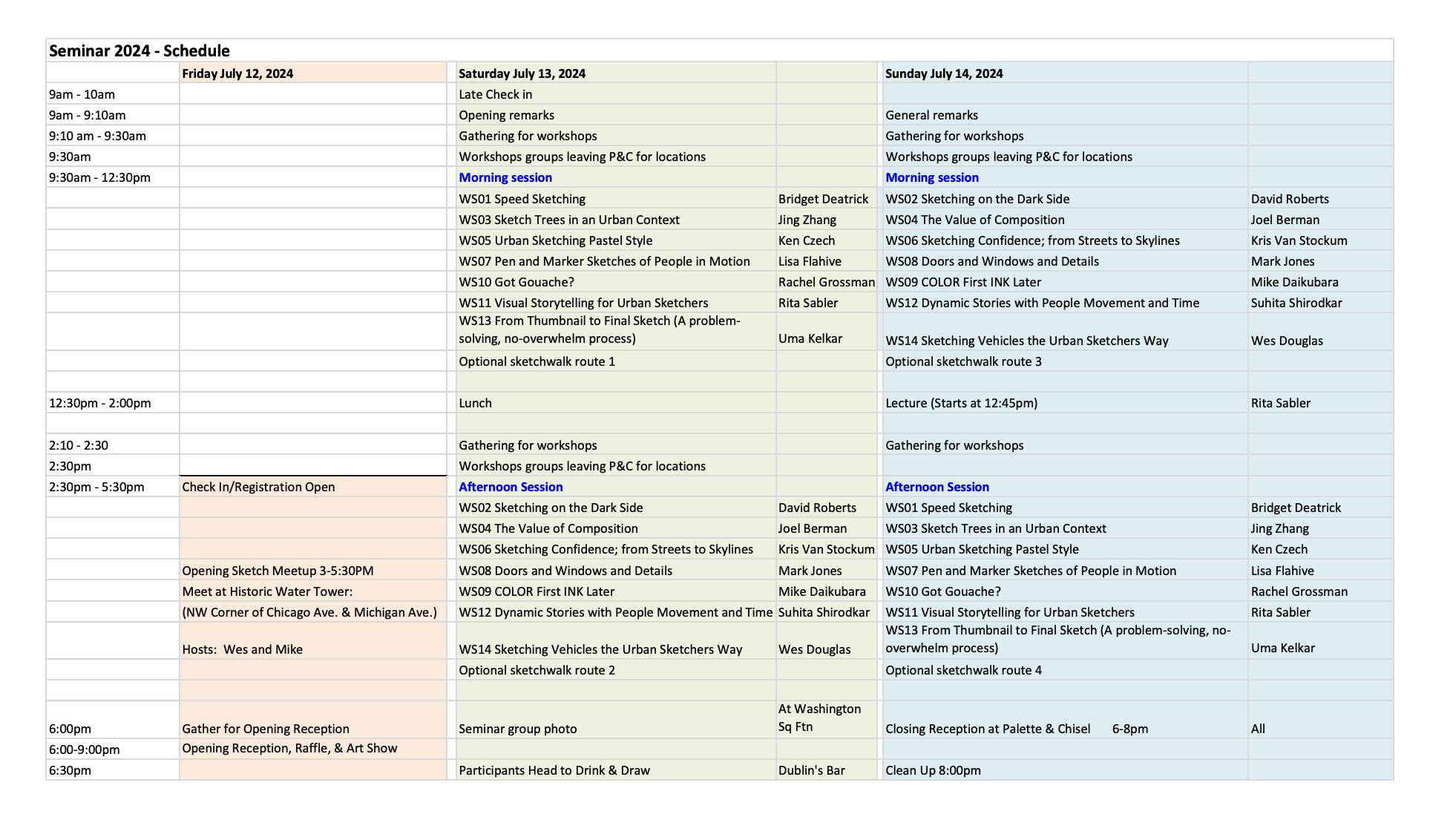
Schedule
Palette & Chisel
1012 N. Dearborn Chicago, IL 60610
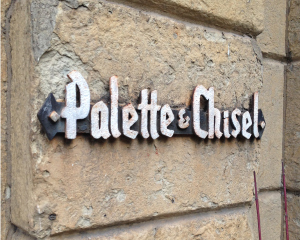
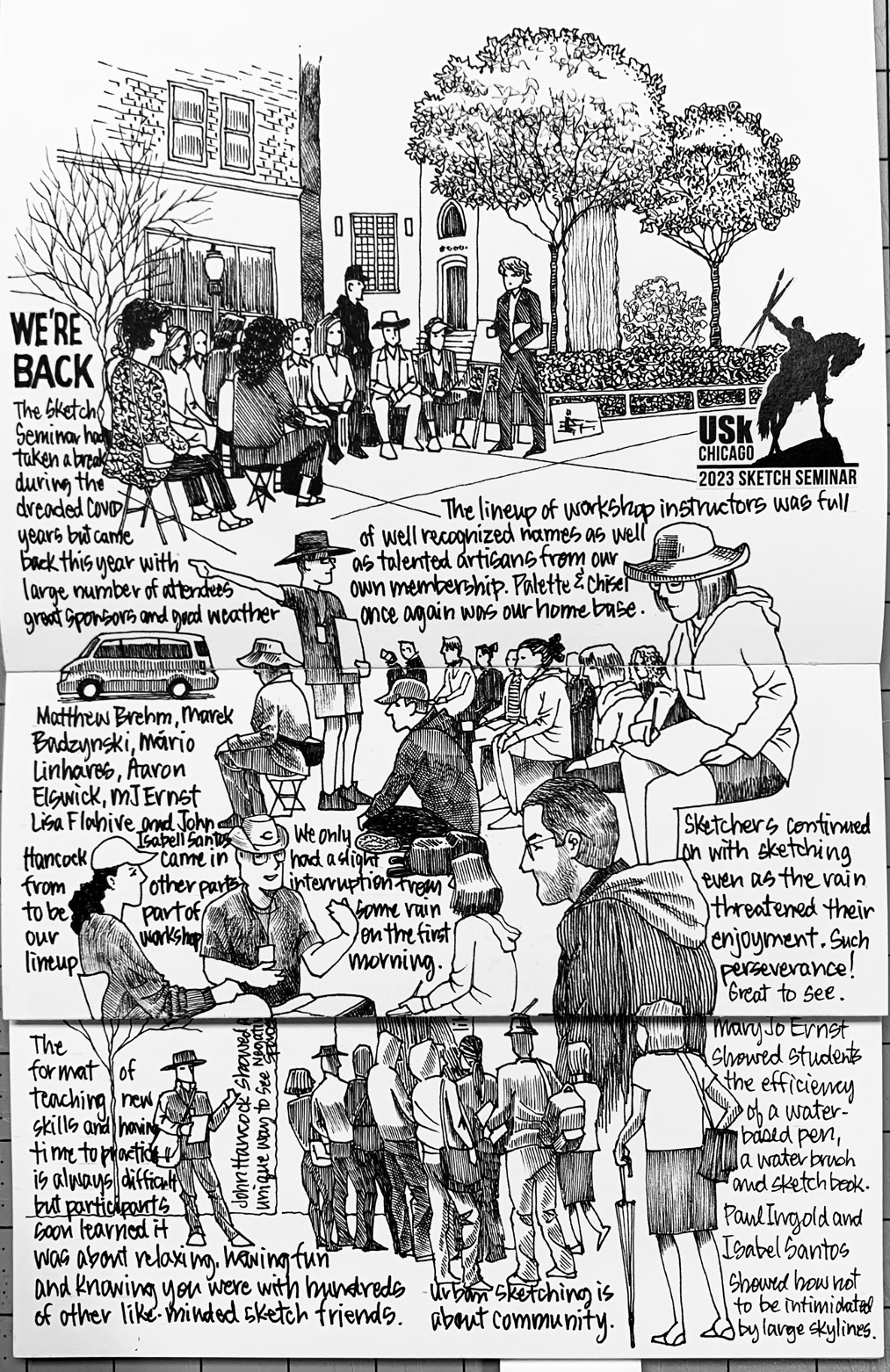
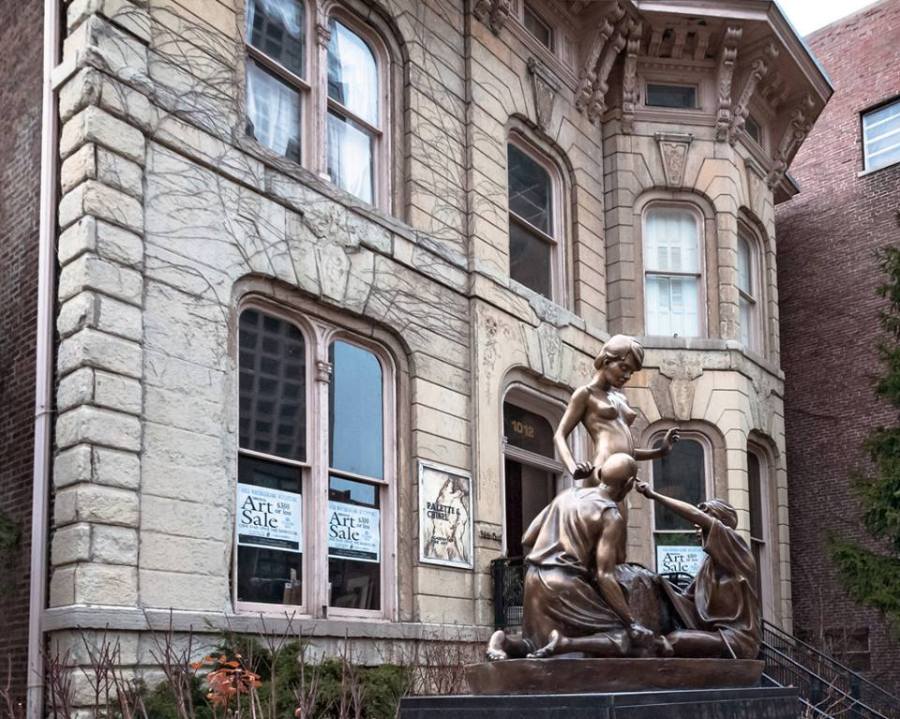
Palette & Chisel, in Chicago, has graciously agreed to be our home-base for the seminar this year. As this is an Urban Sketching seminar, workshops will be held in parks, plazas and on sidewalks nearby.
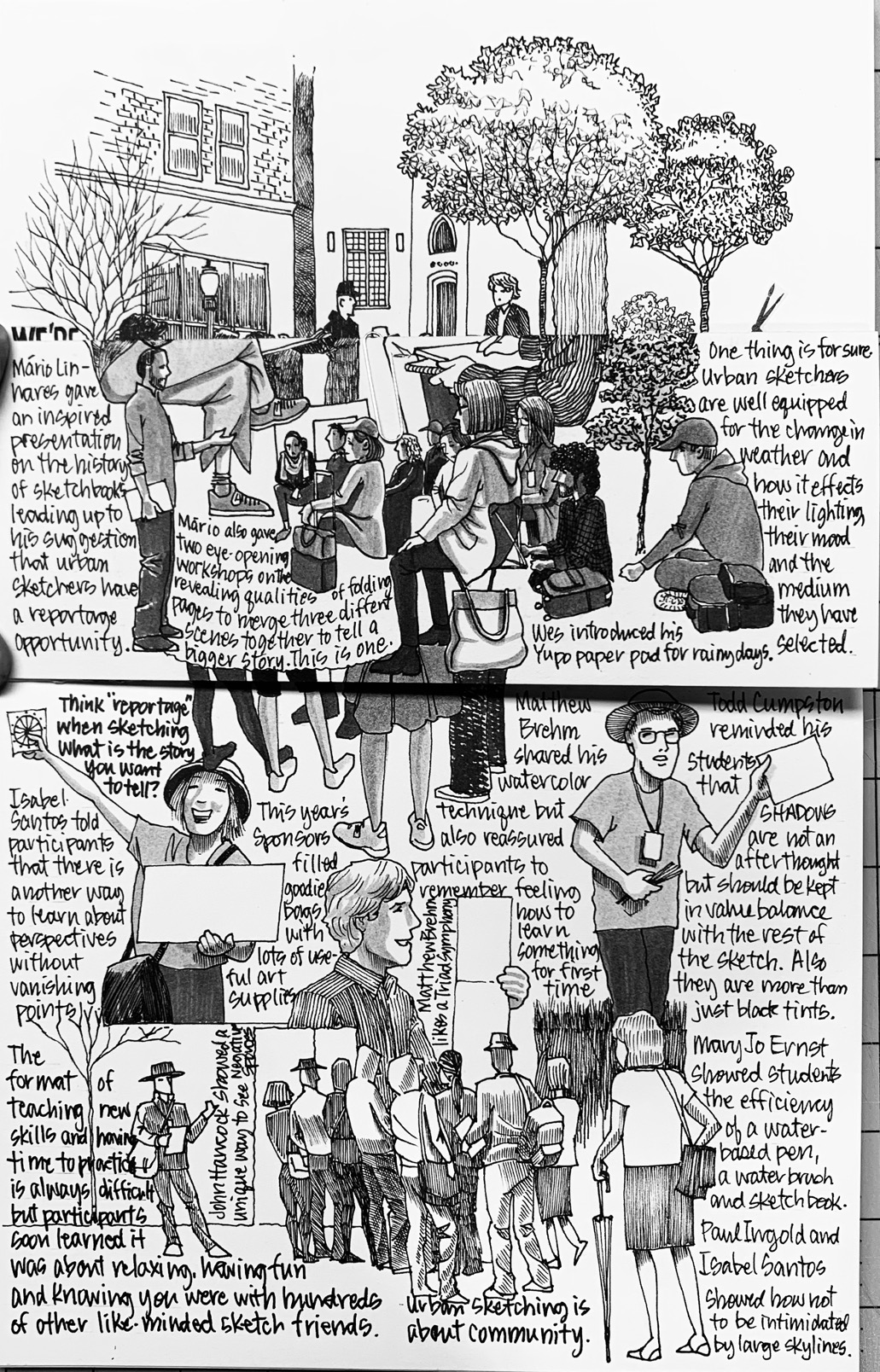
Mary Jo Ernst
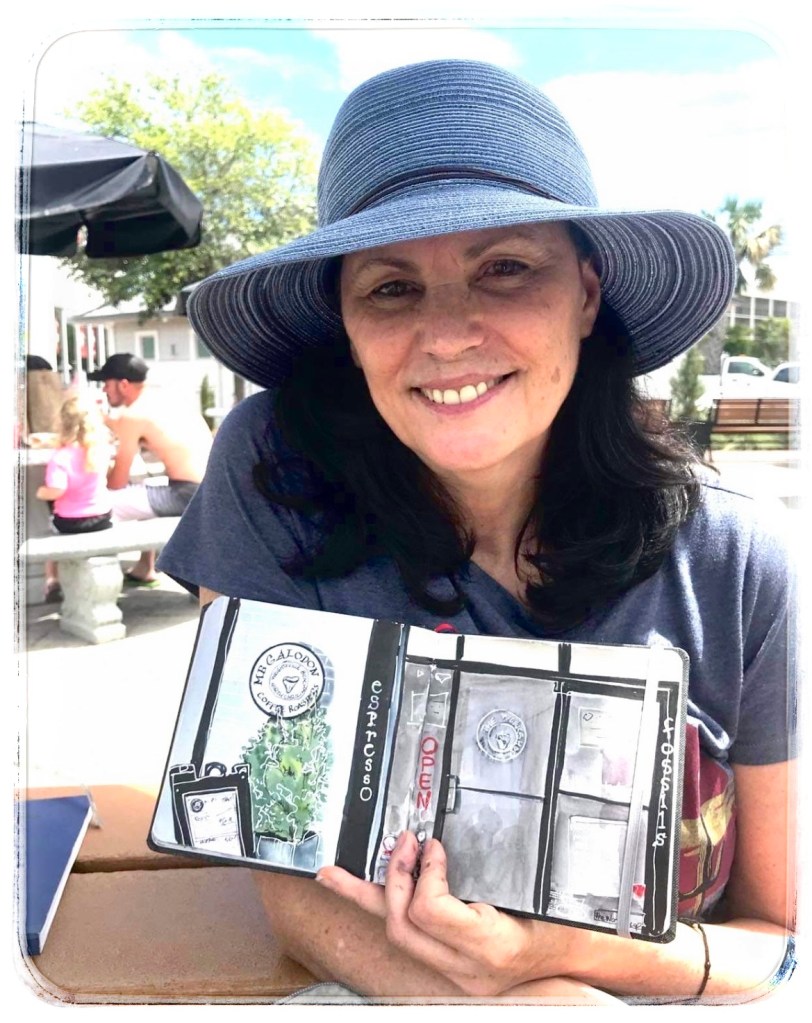
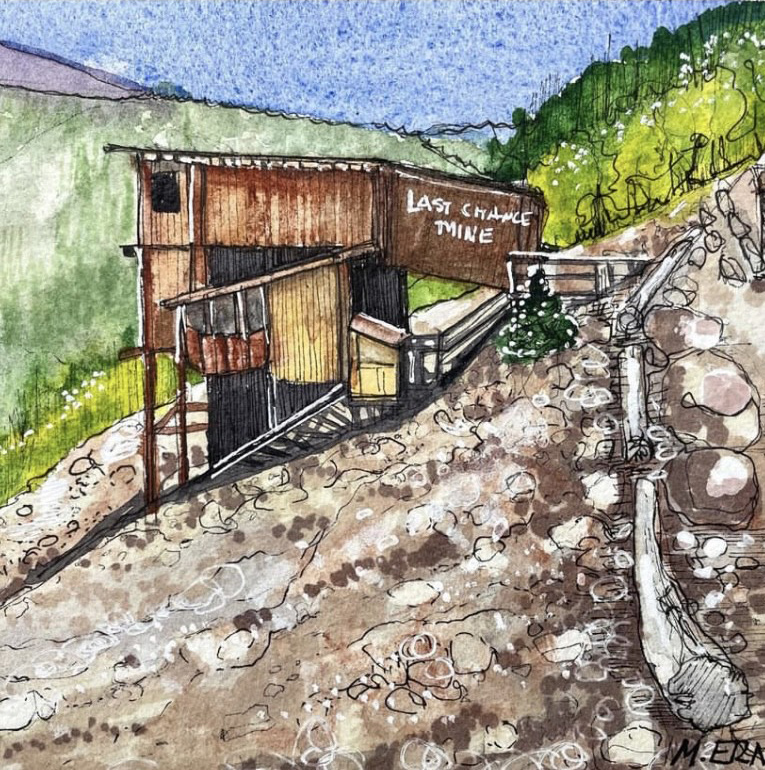
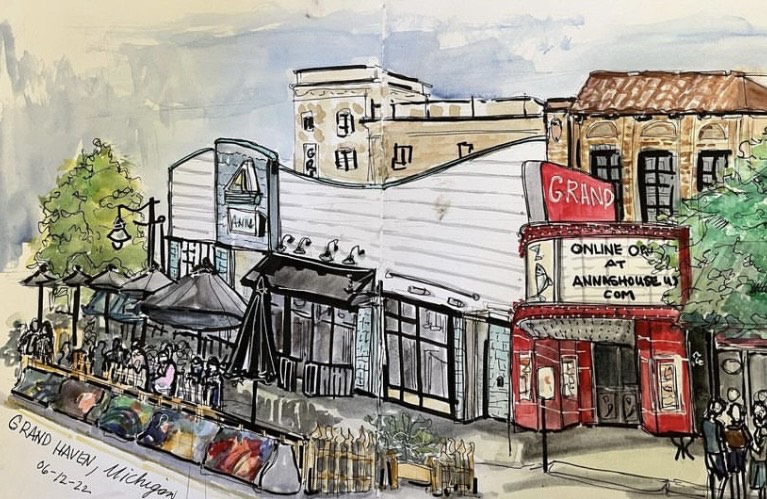
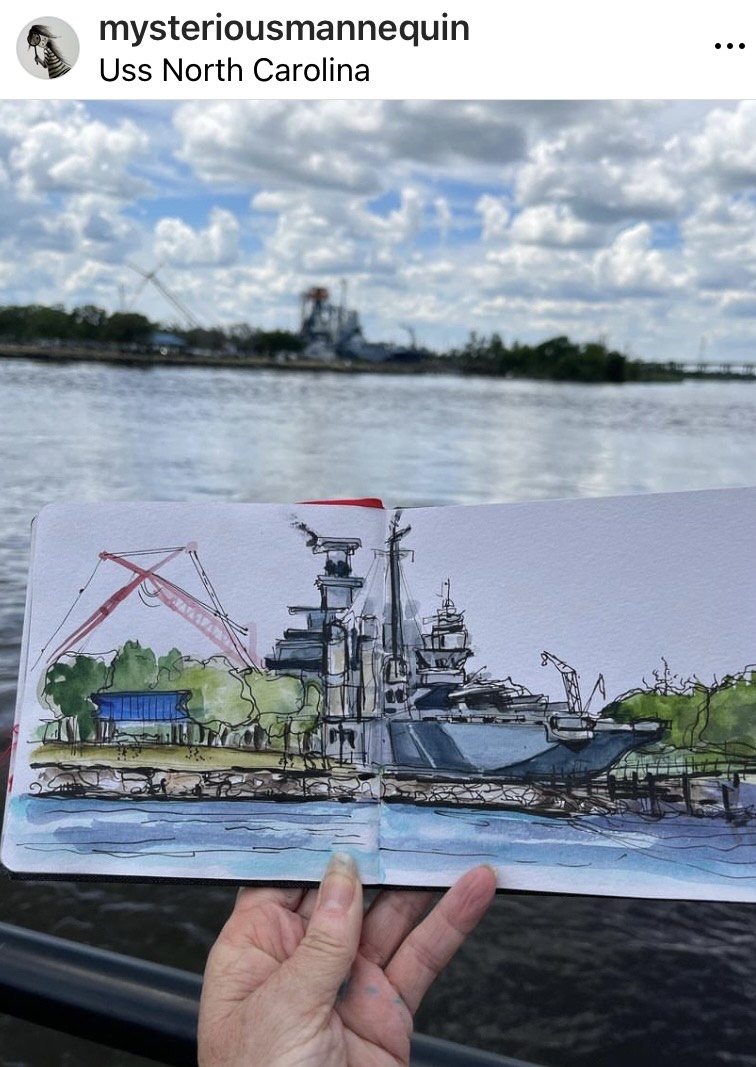
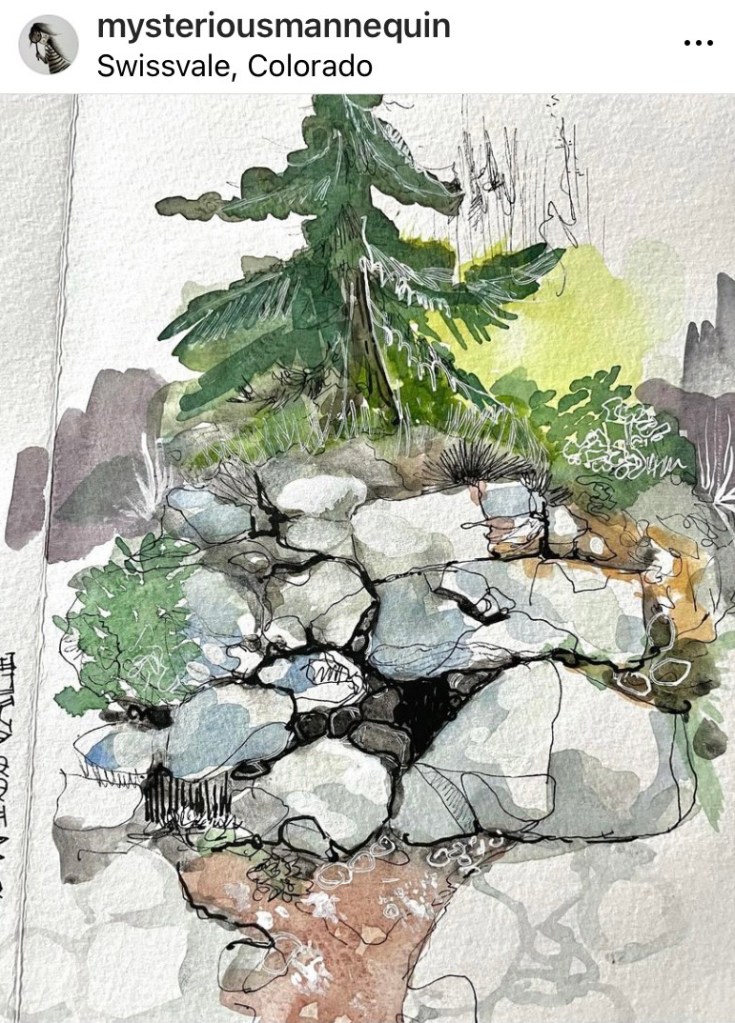
MJ Ernst has a long history with the Urban Sketchers organization. She was an Admin with USk Chicago for 7 years and co-founded the first official chapter in Michigan- USk West Michigan 2 years ago. One of her favorite roles with Urban Sketchers is as the North American Regional Co-ordinator on the global Membership Team, in which she mentors local chapters in the US that apply for official chapter status.
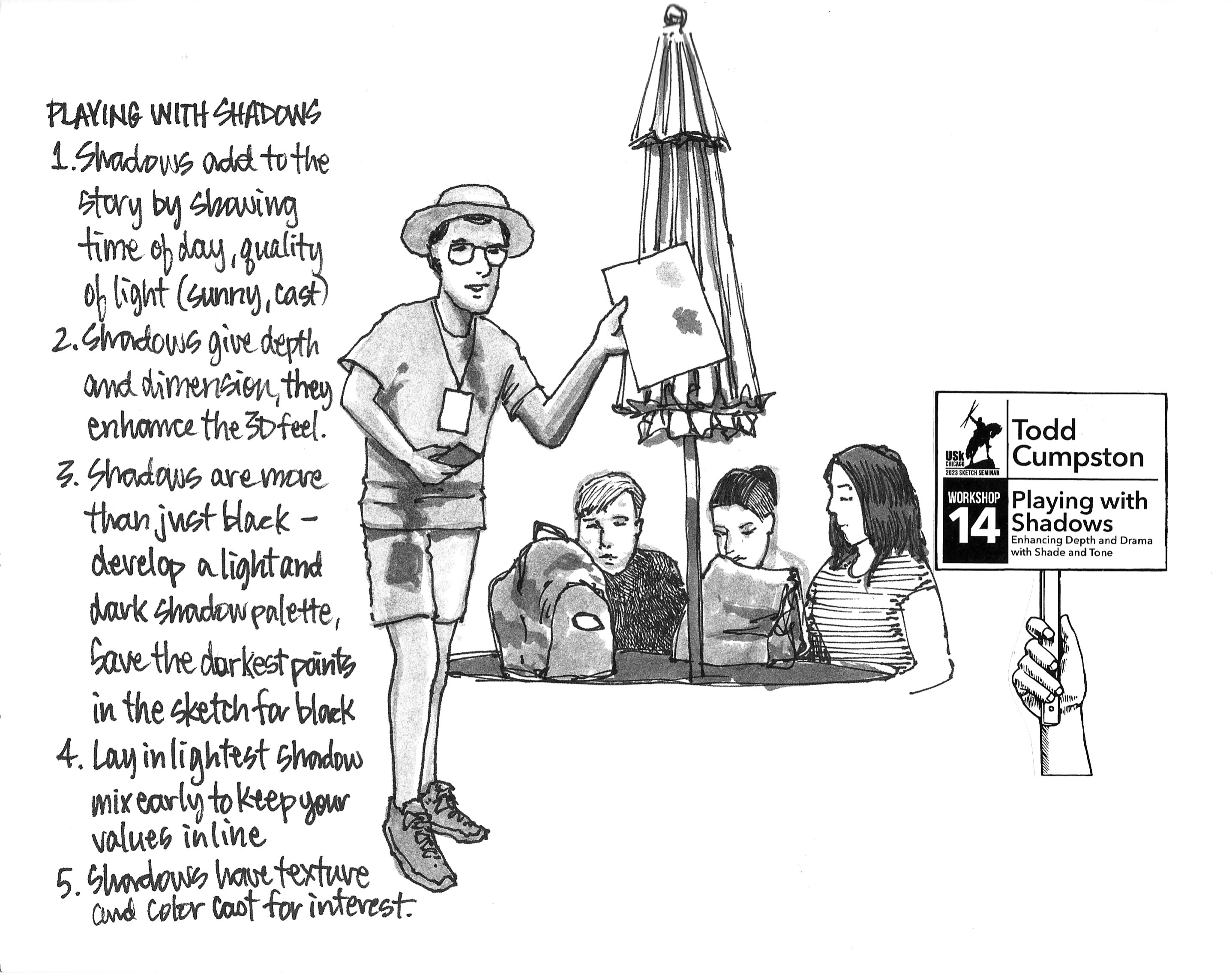
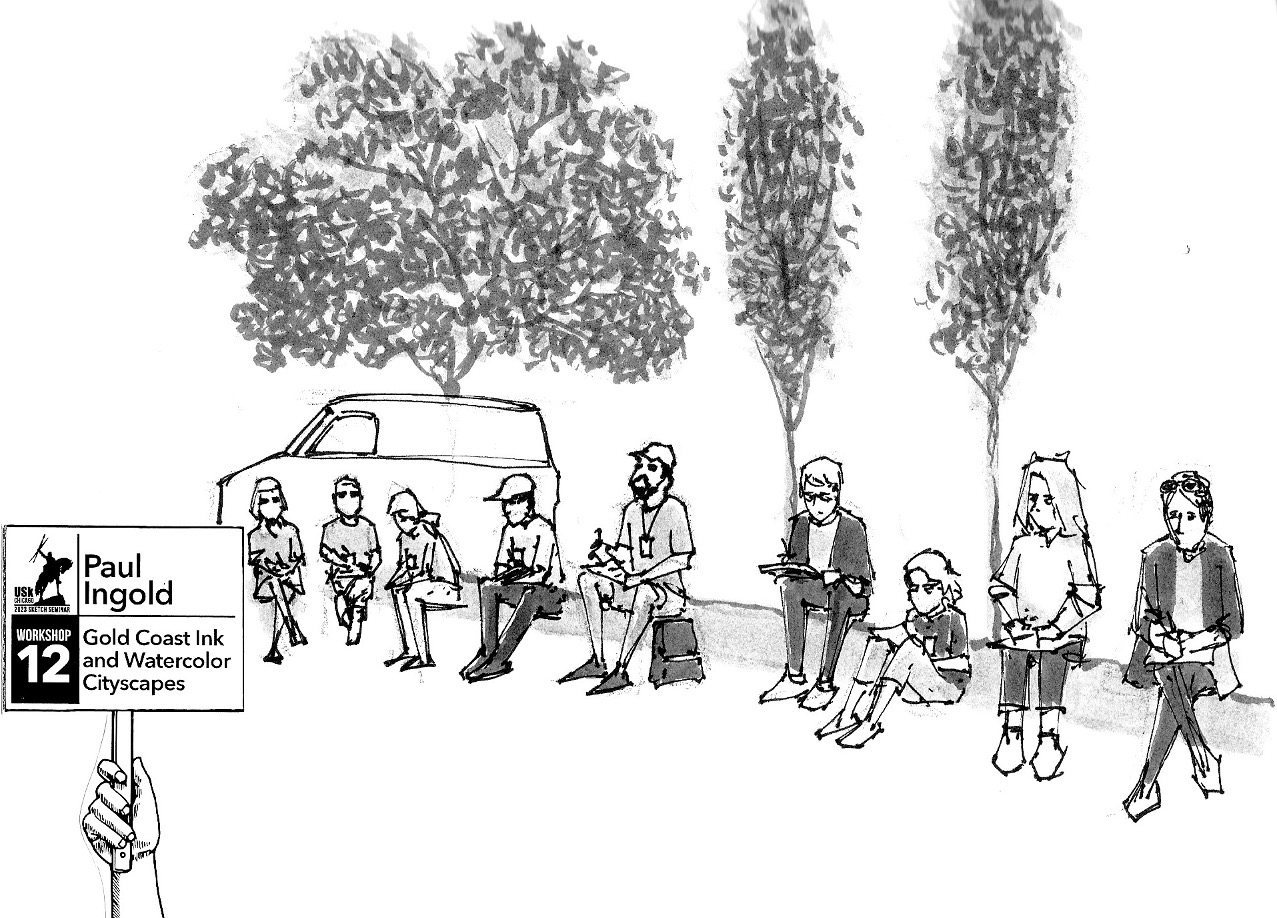
As an artist, she is known for her multi-media style of sketching that always has a sense of whimsy and dramatic values. She has a strong background with fountain pens and ink. She especially loves using soluble ink for its unexpected results and ability to lay down a scene quickly, something she will need while filling the role of Sketch Correspondent for this year’s USk Chicago Sketch Seminar.
Her plan of action to tackle this important role will include an arsenal of mixed media supplies, some chocolate, and comfortable walking shoes (she may be borrowing Wes’s correspondent scooter)! Her focus will consist of all aspects of the big event, such as capturing volunteers in action, covering the amazing workshops and instructors, and featuring some of the sketchers participating in this annual extravaganza. She looks forward to being part of the volunteer team and capturing the energy through sketch reportage.
Find MJ online at:
Instagram: @mysteriousmannequin

Sponsors













Seminar Location
Palette & Chisel
1012 N. Dearborn Chicago, IL 60610
Previous USk Chicago Sketch Seminars
 Urban Sketchers Chicago